Today it’s 11:11. Since I first heard the Rufus Wainwright song "11:11”, I’ve been asking myself when I see that particular time if I’m where I want to be. Kind of a loaded question to ask, but I’ve found myself asking it in my car and at work a great deal. This is not my soul-searching blog (for the most part), but I’ll share that it’s surprising how many times I've seen the clock at 11:11 since then--some periods twice a day. So I have many opportunities to ask myself if I’m satisfied, breathing, grateful. And, if not, what I can do to get there. I have no idea why that started, but I heard the song, and it did.
I’ve heard that he wrote this about 9:11, and that’s pretty clear, and that 11:11 looks like twin towers. Am I wrong in seeing it as hopeful? It feels like it's about gratitude and grief at the same time--no easy feat. No matter, I love the song, and wild how these little superstitions, reminders, can become part of your day. Mine, at least. I am a creature of art, can’t help it. And OCD.
And side note, which makes me laugh--"holding a notion of you" on a couple of sites was "loading a dump truck of human", which definitely makes the song more bleak. If incorrect. Ah, Rufus--diction's not his thing.
"11:11"
Woke up this morning at 11:11
Wasn't in Portand and I wasn't in heaven
Could have been either by the way I was feeling
But I was alive, I was alive
Woke up this morning at 11:11
John was half-naked and Lulu was crying
Over a baby that will never go crazy
And I was alive and kicking
Through this cruel world
Holding a notion of you at 11:11
Tell me what else can I do
What else can I do?
Woke up this morning and something was burning
Realized that everything really does happen in Manhattan
Thoughts were of characters and afternoons lying
And you, you were alive
Oh the hours we are separate
11:11 is just precious time we've wasted
So patch up your bleeding hearts
And put away your posies
I'm gonna have a drink
Before we ring around the rosies with you
Oh the hours we are separate
Oh the hours we are separate
11:11
Tuesday, October 27, 2009


Monday, October 26, 2009
A must read, and stuff
Passing along this inspiring blog entry about a kid who did something amazing with an upsetting illness. Thank you, Patrick for writing it.
Still germinating thoughts about A Serious Man, so hopefully something on that soon.
Talked with my amazing 90 year old Grandma about life, the above movie, Judaism, depression, and keeping up spirits. I'm so lucky she's in my life.
And saw the LA Derby Dolls on Saturday night. The Fight Crew, the team I was rooting for, won. Shannon is an excellent team captain, and big shout out to Bill, her husband, who wore a lobster costume with an leather aviator helmet and sunglasses to be their mascot. There wasn't a time he wasn't moving and getting the crowd riled up. He even wrestled with Bacon, the other team's mascot. Bacon and Lobster roll. Entertaining. Who knew roller derby was such a blast? Then again, what's not to love about a group of adults playing sports with drag names? Amber Alert was super tough (as were Haught Wheels, Broadzilla, Paris Killton and Tara Armov), and I loved the scrappy Judy Gloom, complete with horn rims. Referees included Ofelia Melons and Oliver Clothesoff. Good times.
Still germinating thoughts about A Serious Man, so hopefully something on that soon.
Talked with my amazing 90 year old Grandma about life, the above movie, Judaism, depression, and keeping up spirits. I'm so lucky she's in my life.
And saw the LA Derby Dolls on Saturday night. The Fight Crew, the team I was rooting for, won. Shannon is an excellent team captain, and big shout out to Bill, her husband, who wore a lobster costume with an leather aviator helmet and sunglasses to be their mascot. There wasn't a time he wasn't moving and getting the crowd riled up. He even wrestled with Bacon, the other team's mascot. Bacon and Lobster roll. Entertaining. Who knew roller derby was such a blast? Then again, what's not to love about a group of adults playing sports with drag names? Amber Alert was super tough (as were Haught Wheels, Broadzilla, Paris Killton and Tara Armov), and I loved the scrappy Judy Gloom, complete with horn rims. Referees included Ofelia Melons and Oliver Clothesoff. Good times.
Monday, October 19, 2009
Book Swap

I supposed I must've just needed an isolatory weekend on some level, so that's what I did. And on Saturday afternoon, I went to Vroman's (met a friend who wanted to get rid of some books, too), and went to a book swap hosted by Good Read's and Vroman's in Pasadena.
What a dangerous thing for uncluttering streamliners like myself. Ha. This is to get rid of the books you don't want, and get new ones. But, like one guy I talked to, I got as many at least as I turned in (myabe 1or 2 less, so that's a start). He told me when he went to the last one at Book Soup, he brought six books and left with 40. I have to say, it was kind of fun to see people in this much of a frenzy about books. I was one of the first people, and there weren't many people there, so I thought it would be kind of lame. Within 20 minutes, there were more books than you would know what to do with. There was a lot of crap, but also some things that I've wanted to read. And what's one person's trash is another's treasure, which is what was wonderful about this event. It was also fun to see such a large group of people just looking at books and looking to see what other people were holdling. It was slightly social, with people commenting on books they'd read and telling you if it was good; also fun with people pointing out "That's mine" or "I brought that one." It was fun, and I hear they're going to try to have one a few times a year.
So I got:
American Sucker, David Denby's memoir about losing money in the market crash, the dissolution of his marriage and his internet addiction. Denby can irritate me, but I thought I'd give it a try. And the guy I thought was attractive was the one who donated it. He said he liked it. This, though, not being a Jane Austen novel, did not lead anywhere. Except to more books.
The No. 1 Ladies Detective Agency by Alexander McCall Smith, upon which the HBO series is based. Looks like it's a good one, and I'm interested in reading it.
How to Lose Friends and Alienate People by Toby Young. This book looked to me like it could be annoying, so I never bought it or saw the film base on it. But hey, the price was right to try it out.
Working Stiff, by Grant Stoddard, subtitled "The Misadventures of an accidental sexpert." This was the friend's book, and he liked it. And so did somebody else who walked by, so I picked it up. Like you would a sexpert, I guess.
Cleopatra's Nose, Essays on the Unexpected by Daniel J. Boorstin, essays about American culture and institutions. Interesting. Also, written in '95, so we'll see if it has aged well, if at all. Love cultural essays--yay!
The Creative Habit, by Twyla Tharp. I had just seen her speak at USC on Tuesday (something else I wanted to write about), so this was fresh on my mind. I didn't get the book then, I guess so I could get the hardcover for free. Right place at right time.
Dishwasher, by Pete Jordan, a memoir about washing dishes in all 50 states. I've heard him on This American Life, so I've been intrigued, and now I get to read his book. I guess I love,too, that now he's a bicycle mechanic and writer in Amsterdam. How would someone like that not write an interesting book?
Lost, by Gregory Maguire. By the author of Wicked, it's his take on A Christmas Carol. I did like Wicked, a surprisingly dense read, so I'm looking forward to this. I haven't read any of his other stuff. And mint hardcover first edition, so we love that.
Varieties of Disturbance by Lydia Davis. This is a book of stories, and it was a finalist for the National Book Award, so I figure it must be pretty good. The book is certainly covered with praise. I got it because of the Grace Paley quote, "Davis is the kind of writer about whom you say, 'Oh, at last!'" No small praise.
And then this wierd little book called "Bill Nye's Comic History of the U.S." illustrated by F. Opper. It's blue with red and white embossing, and looks like it was printed in the 40's or 50's, but the publishing information just says "Copyright 1894, by J. Lippincott and Company". I imagine it's a reprint, but it's bizarre. And the original was blue clothbound, like this. Maybe I just picked up a $35 original! And, once again, it's free.
So it looks like I'm in books for a while. Fun!
Sunday, October 11, 2009
Random-pediam and chicken soup
I was looking up a few things on the intranets, among them where parsnips derived from, and found out all kinds of interesting things. Chief among them (aside from learning in the wild they're easy to confuse with hemlock - oops) that parsnips and root vegetables were used like potatoes until those arrived from the new world, and that parsnips have more vitamins and minerals than carrots. The potato part doesn't suprise me; I love mashed parsnips--and I guess they are sometimes taken away after cooking and used for flavor. My guest had never had them and thought they were potato-like.. Today, I put them in a chicken soup I made with carrots, onions, celery, and quinoa pasta (gluten free), which works perfectly in the soup. And, since you didn't ask, my recipe is basically:
Whole roast chicken from the grocery store (or you can roast it yourself, but if you're in a pinch this is easier)
Pull off meat, boil carcass and skin for broth, and flavor as desired. I put a little fennel, rosemary, and dill in today, sometimes it's tarragon, and even a dash of cinammon if I'm feeling crazy. If you do it delicately enough you can't quite pinpoint the flavor, but it's welcome (not like "ew--what's this?![drop spoon]).
Add onion, celery after removing bones, etc., boil, then root vegetables, then corn, and pasta.
Soup's a blast that way, and chicken's the best for just putting whatever in. And with warm iron skillet cornbread, it's a wonderful Sunday eve meal with leftovers for the week.
While I was cooking, I listened to Dolly Parton's Backwood's Barbie album, which I don't think I'd listened to at one sitting. A friend bought me the "Cracker Barrell" special edition, the inside notes of which begin with "Dolly wants a cracker!" I kid you not. That can only be the reason for the last song, called "Berry Pie", which is about as complex and also ear-worm-y as "Short'nin' Bread". She basically sings "I'm gonna make him some berry pie, berry pie, berry pie" over and over. Now, I love Dolly, but oy, this song. I guess when you're one of the 5 most prolific composers in Western music, you're going to have a questionable entry now and again.
Anyhow, there's a song on the album called Shinola, the main lyric being "you don't know love from Shinola". So I thought, since I grew up with a Dad that used the phrase "he doesn't know sh*t from Shinola" a lot, I would like to find out what exactly Shinola was. I thought it might be a product (unless it was a town in Kansas), and I was right. Turns out it's a shoe polish brand from the 20s. It's in Wikipedia, but what's brilliant is the overly self-conscious voice of the person who wrote the entry. It's in hysterically direct opposition to the colloquialism of the phrase. And I love Wikipedia for that. And when I read it, I'm not sure if the person is serious or not--and that makes it even better:
Shit and Shinola, while superficially similar in appearance, are entirely distinct in their function; only one is good for polishing shoes, and anyone who fails to distinguish one from the other must be ignorant or of low acuity.
Hee.
Whole roast chicken from the grocery store (or you can roast it yourself, but if you're in a pinch this is easier)
Pull off meat, boil carcass and skin for broth, and flavor as desired. I put a little fennel, rosemary, and dill in today, sometimes it's tarragon, and even a dash of cinammon if I'm feeling crazy. If you do it delicately enough you can't quite pinpoint the flavor, but it's welcome (not like "ew--what's this?![drop spoon]).
Add onion, celery after removing bones, etc., boil, then root vegetables, then corn, and pasta.
Soup's a blast that way, and chicken's the best for just putting whatever in. And with warm iron skillet cornbread, it's a wonderful Sunday eve meal with leftovers for the week.
While I was cooking, I listened to Dolly Parton's Backwood's Barbie album, which I don't think I'd listened to at one sitting. A friend bought me the "Cracker Barrell" special edition, the inside notes of which begin with "Dolly wants a cracker!" I kid you not. That can only be the reason for the last song, called "Berry Pie", which is about as complex and also ear-worm-y as "Short'nin' Bread". She basically sings "I'm gonna make him some berry pie, berry pie, berry pie" over and over. Now, I love Dolly, but oy, this song. I guess when you're one of the 5 most prolific composers in Western music, you're going to have a questionable entry now and again.
Anyhow, there's a song on the album called Shinola, the main lyric being "you don't know love from Shinola". So I thought, since I grew up with a Dad that used the phrase "he doesn't know sh*t from Shinola" a lot, I would like to find out what exactly Shinola was. I thought it might be a product (unless it was a town in Kansas), and I was right. Turns out it's a shoe polish brand from the 20s. It's in Wikipedia, but what's brilliant is the overly self-conscious voice of the person who wrote the entry. It's in hysterically direct opposition to the colloquialism of the phrase. And I love Wikipedia for that. And when I read it, I'm not sure if the person is serious or not--and that makes it even better:
Shit and Shinola, while superficially similar in appearance, are entirely distinct in their function; only one is good for polishing shoes, and anyone who fails to distinguish one from the other must be ignorant or of low acuity.
Hee.
Friday, October 09, 2009
And now a litle something
Just for entertainment while I'm working on some other posts, here's the song Red Dirt Girl from Emmylou Harris' wonderful Red Dirt Girl album.
I love Emmylou Harris, though she can be a bit of a downer (not her personally, I'm sure she's delightful, but the songs and that keening voice can just get you).
I was thinking that this is really an album, in the sense of a collection of songs that go together. They may not tell the same story, but it's like a novel, an aural novel transporting to another place. Sometimes those places are where you first listened to them--this one was on heavy play for me on my CD player when I worked downtown near the stock exchange--and sometimes they're about pulling you out of where you are. The songs here took me to a country place in the midst of the city; U2's "A Kind of Homecoming" never fails to plunge me deep in snow (I'm sure that's from a video or something, but the whole album feels like that to me, just like Joshua Tree is summer); Jane Siberry's excellent meditation on relationships and loss "When I Was a Boy" (who, according to her website has now changed her name to Issa[there's a great note saying that all information about Jane Siberry should be gleaned from the website, and not asked of Issa -
"Her leap to virtual inventory mirrors her strong steps towards devoting herself even more completely to beinga pure artist. She will also move away from having a ‘home’, ‘car’ and anything she considers anti-’travelling light’ to simply living where she works. Her response to ‘where do you live?’ will not be ‘nowhere’ but ‘everywhere’.]). Wow.
I've always loved songs, and particularly respond to lyrics, as they feel like short stories to me, and gravitate to songwriters who are storytellers (probably why I like country/folk a lot). To be truthful, I've never gotten people who don't hear song lyrics; I know they're out there and I've met many of them, but it's unfathomable to me. I guess it would make sense a full album is like a novel. Though that's never struck me before today.
So go out there and listen to your favorite novel.
I love Emmylou Harris, though she can be a bit of a downer (not her personally, I'm sure she's delightful, but the songs and that keening voice can just get you).
I was thinking that this is really an album, in the sense of a collection of songs that go together. They may not tell the same story, but it's like a novel, an aural novel transporting to another place. Sometimes those places are where you first listened to them--this one was on heavy play for me on my CD player when I worked downtown near the stock exchange--and sometimes they're about pulling you out of where you are. The songs here took me to a country place in the midst of the city; U2's "A Kind of Homecoming" never fails to plunge me deep in snow (I'm sure that's from a video or something, but the whole album feels like that to me, just like Joshua Tree is summer); Jane Siberry's excellent meditation on relationships and loss "When I Was a Boy" (who, according to her website has now changed her name to Issa[there's a great note saying that all information about Jane Siberry should be gleaned from the website, and not asked of Issa -
"Her leap to virtual inventory mirrors her strong steps towards devoting herself even more completely to beinga pure artist. She will also move away from having a ‘home’, ‘car’ and anything she considers anti-’travelling light’ to simply living where she works. Her response to ‘where do you live?’ will not be ‘nowhere’ but ‘everywhere’.]). Wow.
I've always loved songs, and particularly respond to lyrics, as they feel like short stories to me, and gravitate to songwriters who are storytellers (probably why I like country/folk a lot). To be truthful, I've never gotten people who don't hear song lyrics; I know they're out there and I've met many of them, but it's unfathomable to me. I guess it would make sense a full album is like a novel. Though that's never struck me before today.
So go out there and listen to your favorite novel.
Wednesday, October 07, 2009
Anne Fadiman

I'm reading The Spirit Catches You and You Fall Down which should probably be subtitled "pages of heartache, misunderstanding, heorics, and compassion beautifully captured", and I just saw that Anne Fadiman has a new one called Rereadings that I didn't know about but was published in 2006. I'm excited to read it. Looks wonderful--exploring relationships through literature. She's such a good writer.
Sunday, October 04, 2009
Bright Star
Bright star, would I were stedfast as thou art--
Not in lone splendour hung aloft the night
And watching, with eternal lids apart,
Like nature's patient, sleepless Eremite,
The moving waters at their priestlike task
Of pure ablution round earth's human shores,
Or gazing on the new soft-fallen mask
Of snow upon the mountains and the moors--
No--yet still stedfast, still unchangeable,
Pillow'd upon my fair love's ripening breast,
To feel for ever its soft fall and swell,
Awake for ever in a sweet unrest,
Still, still to hear her tender-taken breath,
And so live ever--or else swoon to death.
-Bright Star - John Keats
I bought a copy of Mansfield Park today (see last post). I did order one off of Paperback Swap, but this is the Norton Critical Edition. How can you resist that? I'm a total nerd, I know, but I swoon for historical record, annotation, and critical opinion all just laid out for me while I'm reading. I already found out the meaning of one sentence I would not have understood, having to do with selling of a parsonage to pay off debts and how the parish was passed or owned. I'm not British; I don't know these things.
So with one foot planted firmly in 1811, I decided to go to see Bright Star, the Jane Campion film about John Keats and his love/muse, Fanny Brawne. Loved it, thanks to an incredibly strong central performance by Abbie Cornish. All the supporting work was great, as well, especially Paul Schneider playing a complex cad, Charles Brown, ruinous to the lives around him, and Kerry Fox as Mrs. Brawne. The film concentrates on the period after Keats published Endymion (a thing of beauty is a joy forever 1818 or so) until his death in 1821. Oh, if you don't know the story - Mr. Keats - he dead. At 25.
I won't go into too much of the particulars, but they do fall in love, and have difficulty in Keats' having no income (money is a big thing in Austen, too, and for all those marriage people who talk about love and the sacred institution--here's a good one to see what the reality was 200 years ago). Life without money in London or anywhere in the environs was squalid and difficult to say the least, and the movie well contrasts the sumptuous country life with urban blight and filth.
This is a sensuous film. Campion's characters spend a lot of time outdoors, in fields, in the sun and rain. The cinematography is gorgeous--there is one shot in a field in lavender that I found breathtaking. Campion also spends time with cloth in this film. Fanny is a designer and seamstress, and there is no lack of luxurious fabric, white linen, and wind. I'm sure a thesis could be written on Fanny's emotional state through her clothes, but I don't have one off the top of my head.
Campion uses cloth to create tactile empathy. When Fanny lies down on her bed with Keats' first letter to her, there is a quick cut to her feet, peeking out for under her dress, lying on the side on her bed with her knees drawn up. Who wouldn't relate to that? Her clothes at the beginning are slightly garish and over colorful, becoming more muted and solemn as she is drawn nearer to Keats (as muted as one can be with a feathered hat). Cloth and her work with it is her gift, and it's clear from an early moment when she needs to give something to him to express her emotion, she immediately runs up to her room and embroiders. There are some gorgeous moments that I won't ruin here, but suffice it to say it's visually sumptuous without going over the top.
The cloth works for her in the way that nature does for Keats, and she is gradually drawn into his world and his vision. I'm sure 19th century Hampstead-ers were much closer to nature than we have experience of, and Campion beautifully pulls us into the sensuality of the terrain and of the environment. It's an almost tactile film. I would say the film is poetic, in that it works to draw us in through our senses and descriptions of the sensual world, attempting something that feels tactile to me--that's really the only way I can describe it. I'm not overly familiar with the Romantic poets, but it seems from the poetry included from Keats that's a bit of what they were attempting. She manages beautifully.
I was thinking of this because I've been thinking about Paris, which I saw last weekend. There was a moment when the main character, played by Romain Duris, is standing on his balcony in the snow as it falls lightly over Paris, and the camera pans to a hot cup of coffee in his hand. At that moment, I was pulled into the sensuality of the film, of Cedric Klapisch trying to give us the feel of Paris - a sensual experience of the city. (I'd give a quick review, but I have some issues with believability and I don't want to get off on a diatribe about how riveting Melanie Laurent la fille du moment is, and how ridiculous device-y, sexist, and just this side of offensive her character is--liked the movie fine, aside from it's feeling of contrivance and obviousness to have an excuse to create a paean to the city. Juliette Binoche, please work more, you're fascinating to watch. As are most of these people--the French cast interesting actors in their movies. Not great, but 3/4 of a good movie and not a bad place to be).
ANYhow, back to England circa 1820. Can I please give more props to Campion and her design team for having people wear clothes that look like people lived in them? We tend to see a lot of period movies where everything is lush and perfect. In keeping with the point of the piece, the clothes looked inhabited and felt. Aside from that, they were worn more than once. Although Fanny had more interesting dresses, she still wore several pieces over and over. I remember loving the Amanda Root/Ciaran Hinds Persuasion because the bottoms of the dresses were muddy. Same here. The world then was not paved.
Ben Whishaw was good as Keats. I wasn't blown over by him, and didn't fall in love with him myself, but I could believe the power of her feelings, which is the point. I was taken with Paul Schneider (though I loved him too in Lars and the Real Girl so I guess I shouldn't be surprised. He's allowed his moments of depth playing a feckless character, who is motivated on one hand by his own indulgence, and the other for his deep affection for Keats. It's actually one of my favorite performances of the year, and I hope he gets a nod or two from it. He deserves it.
One more salute to Campion. We are not in an age of sentiment. Navigating one of the most sentimental times in history for an audience not on a steady diet of it could easily turn treacly. Instead, she gives us a character whose gravity of feeling pulls us through some pitfalls that could be deadly for a contemporary audience, not the least of which is recitation of romantic poetry in dialogue. I've read some critics have had issue with the poetry used in the dialogue (I even heard the dialogue was "stylized", which I didn't notice--perhaps I need a better knowledge of Keats), but to me it was merely an extension of the main characters' deep regard for each other. It was a different time. People were deeply sentimental, swept up in the romance of nature, love and death, finding revelation and revolution in elevating emotion and lived, almost ecstatic, feeling into the highest purpose. Nature, Love, Death - I guess those really are the big three, but seeing them through the non-cynical eye of two centuries back, or at least the first great backlash against cynicism that could be encouraged by the age of enlightenment, is a treat. (And I'm no historian of the period--I'm sure it's much more complex than that). She pulls it off beautifully. I think it would be a temptation to have tried to make this sumptuous, to equate the rich voluptuousness of the language to the an abundance of sensation, rich color and and expensive fashion parade. By playing against this, Campion is able to tell her story and communicate the depth of emotion the story has to offer.
Abbie Cornish - I can't say enough. She carries the film, but she never loses track of the material. Her feeling is deep and grounded, and I was completely with her as she began to recite Keats' words back to him. She's not a simp, she's not a child, and we see her grow up through the action of the film. Her grief, when it comes, is painful to watch. I cried. And I am not one to cry at films. I think I've cried maybe 5 times in total at movies, and usually for some personal reason rather than the film itself, but I was wiping away tears. This one got me. Beautiful, sensual, clear of irony and cynicism without being cloying. I loved it.
And I loved Whip It, too, but that's another story.
Not in lone splendour hung aloft the night
And watching, with eternal lids apart,
Like nature's patient, sleepless Eremite,
The moving waters at their priestlike task
Of pure ablution round earth's human shores,
Or gazing on the new soft-fallen mask
Of snow upon the mountains and the moors--
No--yet still stedfast, still unchangeable,
Pillow'd upon my fair love's ripening breast,
To feel for ever its soft fall and swell,
Awake for ever in a sweet unrest,
Still, still to hear her tender-taken breath,
And so live ever--or else swoon to death.
-Bright Star - John Keats
I bought a copy of Mansfield Park today (see last post). I did order one off of Paperback Swap, but this is the Norton Critical Edition. How can you resist that? I'm a total nerd, I know, but I swoon for historical record, annotation, and critical opinion all just laid out for me while I'm reading. I already found out the meaning of one sentence I would not have understood, having to do with selling of a parsonage to pay off debts and how the parish was passed or owned. I'm not British; I don't know these things.
So with one foot planted firmly in 1811, I decided to go to see Bright Star, the Jane Campion film about John Keats and his love/muse, Fanny Brawne. Loved it, thanks to an incredibly strong central performance by Abbie Cornish. All the supporting work was great, as well, especially Paul Schneider playing a complex cad, Charles Brown, ruinous to the lives around him, and Kerry Fox as Mrs. Brawne. The film concentrates on the period after Keats published Endymion (a thing of beauty is a joy forever 1818 or so) until his death in 1821. Oh, if you don't know the story - Mr. Keats - he dead. At 25.
I won't go into too much of the particulars, but they do fall in love, and have difficulty in Keats' having no income (money is a big thing in Austen, too, and for all those marriage people who talk about love and the sacred institution--here's a good one to see what the reality was 200 years ago). Life without money in London or anywhere in the environs was squalid and difficult to say the least, and the movie well contrasts the sumptuous country life with urban blight and filth.
This is a sensuous film. Campion's characters spend a lot of time outdoors, in fields, in the sun and rain. The cinematography is gorgeous--there is one shot in a field in lavender that I found breathtaking. Campion also spends time with cloth in this film. Fanny is a designer and seamstress, and there is no lack of luxurious fabric, white linen, and wind. I'm sure a thesis could be written on Fanny's emotional state through her clothes, but I don't have one off the top of my head.
Campion uses cloth to create tactile empathy. When Fanny lies down on her bed with Keats' first letter to her, there is a quick cut to her feet, peeking out for under her dress, lying on the side on her bed with her knees drawn up. Who wouldn't relate to that? Her clothes at the beginning are slightly garish and over colorful, becoming more muted and solemn as she is drawn nearer to Keats (as muted as one can be with a feathered hat). Cloth and her work with it is her gift, and it's clear from an early moment when she needs to give something to him to express her emotion, she immediately runs up to her room and embroiders. There are some gorgeous moments that I won't ruin here, but suffice it to say it's visually sumptuous without going over the top.
The cloth works for her in the way that nature does for Keats, and she is gradually drawn into his world and his vision. I'm sure 19th century Hampstead-ers were much closer to nature than we have experience of, and Campion beautifully pulls us into the sensuality of the terrain and of the environment. It's an almost tactile film. I would say the film is poetic, in that it works to draw us in through our senses and descriptions of the sensual world, attempting something that feels tactile to me--that's really the only way I can describe it. I'm not overly familiar with the Romantic poets, but it seems from the poetry included from Keats that's a bit of what they were attempting. She manages beautifully.
I was thinking of this because I've been thinking about Paris, which I saw last weekend. There was a moment when the main character, played by Romain Duris, is standing on his balcony in the snow as it falls lightly over Paris, and the camera pans to a hot cup of coffee in his hand. At that moment, I was pulled into the sensuality of the film, of Cedric Klapisch trying to give us the feel of Paris - a sensual experience of the city. (I'd give a quick review, but I have some issues with believability and I don't want to get off on a diatribe about how riveting Melanie Laurent la fille du moment is, and how ridiculous device-y, sexist, and just this side of offensive her character is--liked the movie fine, aside from it's feeling of contrivance and obviousness to have an excuse to create a paean to the city. Juliette Binoche, please work more, you're fascinating to watch. As are most of these people--the French cast interesting actors in their movies. Not great, but 3/4 of a good movie and not a bad place to be).
ANYhow, back to England circa 1820. Can I please give more props to Campion and her design team for having people wear clothes that look like people lived in them? We tend to see a lot of period movies where everything is lush and perfect. In keeping with the point of the piece, the clothes looked inhabited and felt. Aside from that, they were worn more than once. Although Fanny had more interesting dresses, she still wore several pieces over and over. I remember loving the Amanda Root/Ciaran Hinds Persuasion because the bottoms of the dresses were muddy. Same here. The world then was not paved.
Ben Whishaw was good as Keats. I wasn't blown over by him, and didn't fall in love with him myself, but I could believe the power of her feelings, which is the point. I was taken with Paul Schneider (though I loved him too in Lars and the Real Girl so I guess I shouldn't be surprised. He's allowed his moments of depth playing a feckless character, who is motivated on one hand by his own indulgence, and the other for his deep affection for Keats. It's actually one of my favorite performances of the year, and I hope he gets a nod or two from it. He deserves it.
One more salute to Campion. We are not in an age of sentiment. Navigating one of the most sentimental times in history for an audience not on a steady diet of it could easily turn treacly. Instead, she gives us a character whose gravity of feeling pulls us through some pitfalls that could be deadly for a contemporary audience, not the least of which is recitation of romantic poetry in dialogue. I've read some critics have had issue with the poetry used in the dialogue (I even heard the dialogue was "stylized", which I didn't notice--perhaps I need a better knowledge of Keats), but to me it was merely an extension of the main characters' deep regard for each other. It was a different time. People were deeply sentimental, swept up in the romance of nature, love and death, finding revelation and revolution in elevating emotion and lived, almost ecstatic, feeling into the highest purpose. Nature, Love, Death - I guess those really are the big three, but seeing them through the non-cynical eye of two centuries back, or at least the first great backlash against cynicism that could be encouraged by the age of enlightenment, is a treat. (And I'm no historian of the period--I'm sure it's much more complex than that). She pulls it off beautifully. I think it would be a temptation to have tried to make this sumptuous, to equate the rich voluptuousness of the language to the an abundance of sensation, rich color and and expensive fashion parade. By playing against this, Campion is able to tell her story and communicate the depth of emotion the story has to offer.
Abbie Cornish - I can't say enough. She carries the film, but she never loses track of the material. Her feeling is deep and grounded, and I was completely with her as she began to recite Keats' words back to him. She's not a simp, she's not a child, and we see her grow up through the action of the film. Her grief, when it comes, is painful to watch. I cried. And I am not one to cry at films. I think I've cried maybe 5 times in total at movies, and usually for some personal reason rather than the film itself, but I was wiping away tears. This one got me. Beautiful, sensual, clear of irony and cynicism without being cloying. I loved it.
And I loved Whip It, too, but that's another story.
Thursday, October 01, 2009
Reading List
So I really want to write about Parade at the Taper, but I haven't quite gathered my thoughts. I will say though, it has some powerful moments--the ending really got me. And I quickly have to ask: Davis Gaines and Charlotte D'Amboise--what is with the plastic surgery? I'm more used to it on women, so hers wasn't as wierd (except that I thought she looked like Melissa Gilbert and it didn't occur to me until today that she was in it and I had actually seen her - and I've seen her on film and on stage before), but his was just bizarre to me--especially since he played the older characters. He has such a great big voice. I don't know why you'd do it--I suppose there's pressure to do it. Or maybe when you're an actor and so much is out of your control, that feels within it.
I do know that I just gave myself a papercut underneath my fingernail which hurts and is making typing wierdly painful. Who knew you could do that? Learn something new every day.
So, list making. I was listening to a T. Coraghessan Boyle story about Jane Austen, and he mentioned Mansfield Park. I've never read that. I love Jane Austen, but that's the one I don't know. Maybe it's time to read it. Looks like you can read the whole text of it on Google.
Currently I'm reading or have on my list
Fraud - David Rakoff - Loving it. Funny and Sedaris-y, who I suppose is his closest cousin in style and view. He's more arch in some ways, but similar voice. I like his writing.
When You Are Engulfed in Flames - David Sedaris - on my nightstand. I've read a few pieces. See above.
Getting Mother's Body - Suzan-Lori Parks - never read her stuff, and have never read As I Lay Dying, which this is a riff on. Gap in my reading knowledge--there are many. Looks interesting, and a nice toe in to fiction again. And always interesting to see a playwright craft a novel.
How to Be Alone - Jonathan Franzen - I wrote about this before, about leaving it on the plane. So a few essays in. He can be quite cranky, but that's his thing. He manages to steer away from self-involved snob, which he veers close to, through accurate self-appraisal and passionate enagagement with the world around him. Love a good essay. His essay "My Father's Brain" about his Father's struggle with Alzheimer's and his dealing with it is brilliant.
Speaking of essays, and I'm sure I wrote about these before, but do yourself a favor and pick up "At Large and At Small: Familiary Essays" and "Ex Libris: COnfessions of a common reader" by Anne Fadiman. Simultaneously grounded and enchanting. Fascinating subjects and a wonderful writer. I haven't read The Spirit Catches You and You Fall Down, a winner of the National Book Critics Circle award about a girl with severe Epilepsy in California who is the child of Hmong refugees. Perhaps because I know it will be heartbreaking.
And I'm two issues of the New Yorker behind. What's new? I'm just grooving on the essays lately.
I'm thinking about observing Shabbat just so I can read. Can't "engaged in study" mean whatever you want it to?
I do know that I just gave myself a papercut underneath my fingernail which hurts and is making typing wierdly painful. Who knew you could do that? Learn something new every day.
So, list making. I was listening to a T. Coraghessan Boyle story about Jane Austen, and he mentioned Mansfield Park. I've never read that. I love Jane Austen, but that's the one I don't know. Maybe it's time to read it. Looks like you can read the whole text of it on Google.
Currently I'm reading or have on my list
Fraud - David Rakoff - Loving it. Funny and Sedaris-y, who I suppose is his closest cousin in style and view. He's more arch in some ways, but similar voice. I like his writing.
When You Are Engulfed in Flames - David Sedaris - on my nightstand. I've read a few pieces. See above.
Getting Mother's Body - Suzan-Lori Parks - never read her stuff, and have never read As I Lay Dying, which this is a riff on. Gap in my reading knowledge--there are many. Looks interesting, and a nice toe in to fiction again. And always interesting to see a playwright craft a novel.
How to Be Alone - Jonathan Franzen - I wrote about this before, about leaving it on the plane. So a few essays in. He can be quite cranky, but that's his thing. He manages to steer away from self-involved snob, which he veers close to, through accurate self-appraisal and passionate enagagement with the world around him. Love a good essay. His essay "My Father's Brain" about his Father's struggle with Alzheimer's and his dealing with it is brilliant.
Speaking of essays, and I'm sure I wrote about these before, but do yourself a favor and pick up "At Large and At Small: Familiary Essays" and "Ex Libris: COnfessions of a common reader" by Anne Fadiman. Simultaneously grounded and enchanting. Fascinating subjects and a wonderful writer. I haven't read The Spirit Catches You and You Fall Down, a winner of the National Book Critics Circle award about a girl with severe Epilepsy in California who is the child of Hmong refugees. Perhaps because I know it will be heartbreaking.
And I'm two issues of the New Yorker behind. What's new? I'm just grooving on the essays lately.
I'm thinking about observing Shabbat just so I can read. Can't "engaged in study" mean whatever you want it to?
Monday, September 28, 2009
Elizabeth
So this is one of those nights, when I start writing something in my head, and instead of writing it down I just hone it further and further in my mind, forgetting that it will be forgotten in the morning, or sometimes the meat of it, so I'll be left with tossing and turning and not getting any sleep anyway, but not writing it down. So here's the counter-intuitive action of just getting up and getting it down so I'll actually go to sleep.
I've been wanting to write for a while about Elizabeth's blog,, which can be found here, but I've been a little dumbstruck. She's a beautiful writer, and she shines through in what she writes, but the subject of some of her posts makes me a little emotional. So knowing that you're going to be emotional feels a little like driving into a heavy rainstorm, and the air's not working in your car. You know it will be intense, you're not quite sure you're going to make it to the other end, but somehow the defogger kicks in and the rain lets up and you're on the other side. So I'm having faith that the sun will come out, and I'll do this without making a mess of it.
Elizabeth and I did a reading together a few months ago, and found out we had a mutual friend. So, we had a great conversation, and I started reading Elizabeth's blog. Elizabeth posts about many things, and very eloquently about her daughter's epileptic seizure disorder. In fact, there is a walk on October 18th to raise money for it, and I'm hoping to join her team or give money, probably both. Now I've not had a seizure disorder, or anyone in my family who has, but my father was diagnosed with MS when I was 5, and eventually died of it in 2002.
And here is the rainstorm.
So, reading Elizabeth's blog I am humbled at how she deals with the disorder, and with her two sons and husband and managing it. I am blown away that she talks with them about it, that she honors their own childhoods; that they are children, allowing them to be that and also have a family member with a very serious challenging disorder--enlisting their help and support while providing it to them as well; and her unbounded love for her beautiful daughter, which shines through in every word.
I was a child watching my father have seizures that were a side effect of the MS, go through different medications, walk with crutches, then a wheelchair, and all in a strange atmosphere of anger, frustration, and silence. I remember being told of the diagnosis, but after that it was really the thing that ruled the house and most of my childhood. I'm not blaming my parents at all--I can't imagine having children let alone dealing with that and how helpless you feel in the face of it, but I can't help but think of how different it might have been had there been that kind of understanding or place to talk about what we were all going through. It was definitely a different time, and I just don't think the tools were there for people. The past is the past, but I've really been wanting to just salute? commend? praise? her for the amazing way she shares what she's going through. And I'm amazed at the online community and support there is--I don't think that was available in the 70's the way that it is now, and I love seeing it. It's been very healing, actually, even though the experience is over 25 years ago.
I had misgivings about writing this because it's a) a little personal, b) about my reaction, c) afraid my mother would read this and take this personally, which it's not meant to be at all , but I wanted to let Elizabeth know how helpful and healing (besides informational, angering, and many other things) it is to read what she is going through.
And yes, I could've just sent an email, but I couldn't ask you to donate then, could I? ;)
I've been wanting to write for a while about Elizabeth's blog,, which can be found here, but I've been a little dumbstruck. She's a beautiful writer, and she shines through in what she writes, but the subject of some of her posts makes me a little emotional. So knowing that you're going to be emotional feels a little like driving into a heavy rainstorm, and the air's not working in your car. You know it will be intense, you're not quite sure you're going to make it to the other end, but somehow the defogger kicks in and the rain lets up and you're on the other side. So I'm having faith that the sun will come out, and I'll do this without making a mess of it.
Elizabeth and I did a reading together a few months ago, and found out we had a mutual friend. So, we had a great conversation, and I started reading Elizabeth's blog. Elizabeth posts about many things, and very eloquently about her daughter's epileptic seizure disorder. In fact, there is a walk on October 18th to raise money for it, and I'm hoping to join her team or give money, probably both. Now I've not had a seizure disorder, or anyone in my family who has, but my father was diagnosed with MS when I was 5, and eventually died of it in 2002.
And here is the rainstorm.
So, reading Elizabeth's blog I am humbled at how she deals with the disorder, and with her two sons and husband and managing it. I am blown away that she talks with them about it, that she honors their own childhoods; that they are children, allowing them to be that and also have a family member with a very serious challenging disorder--enlisting their help and support while providing it to them as well; and her unbounded love for her beautiful daughter, which shines through in every word.
I was a child watching my father have seizures that were a side effect of the MS, go through different medications, walk with crutches, then a wheelchair, and all in a strange atmosphere of anger, frustration, and silence. I remember being told of the diagnosis, but after that it was really the thing that ruled the house and most of my childhood. I'm not blaming my parents at all--I can't imagine having children let alone dealing with that and how helpless you feel in the face of it, but I can't help but think of how different it might have been had there been that kind of understanding or place to talk about what we were all going through. It was definitely a different time, and I just don't think the tools were there for people. The past is the past, but I've really been wanting to just salute? commend? praise? her for the amazing way she shares what she's going through. And I'm amazed at the online community and support there is--I don't think that was available in the 70's the way that it is now, and I love seeing it. It's been very healing, actually, even though the experience is over 25 years ago.
I had misgivings about writing this because it's a) a little personal, b) about my reaction, c) afraid my mother would read this and take this personally, which it's not meant to be at all , but I wanted to let Elizabeth know how helpful and healing (besides informational, angering, and many other things) it is to read what she is going through.
And yes, I could've just sent an email, but I couldn't ask you to donate then, could I? ;)
Friday, September 25, 2009
What's Art?
A friend of mine and I got into a discussion about art the other day. He’s a graphic design teacher, so he teaches art. He told me (from what I understand) that in his view that art didn’t start until the impressionists, as that was when there was really art for art’s sake—especially when it’s not representative, as there is no intent on the artist’s part for meaning, it’s only expression. Although I (pretty vehemently) disagree with this, it was an interesting place to try and figure out what my own definition for art is, which was his point—that you have to start somewhere. So, it’s easier for me to set myself up in opposition to something—I’ve always been an arguer—and I think I may do that a bit now. And it’s not personal—it’s fun to find someone to have these conversations with as you can hone your own ideas. Dust of the rust of the creaky brain gears. And since my friend was enjoying the conversation as well, I’m going to have a little stream of consciousness working it out here. It’s what I love about blogging: I can end up wherever.
Art for art’s sake is such a complicated term to me in and of itself. If art is in the marketplace it’s for something other than art, it’s for commerce. You could argue that Warhol, the champion of art for art’s sake, was actually just making product. And if it’s purpose is to make money, it’s no longer “art for art’s sake”. That phrase, I guess, raises my hackles because it separates out a supposed artist intention. What is the artist’s intention in making art? Similarly, if the test is that the viewer is to come with their own ideas, what makes one think that a picture is representational that the viewers will come to it with the same sense of history or expectation. Even the most pictorial of artists has a personal vision and eye, and just because they have an intention for us to have a certain reception to their art doesn’t mean we will. There are a lot of signs and symbols, in classical painting particularly, that we don’t have a background for.

When we were speaking I brought up the Unicorn tapestries. Behind the Unicorn there are some ridiculous numbers of flowers and plants, each of which had a symbolic meaning probably known to some of it not all of the viewers when they were woven in the 15th century. A viewer now does not have those same references. Does that mean that this piece, with a possible intended meaning, is now ‘art for art’s sake’ since modern viewers do not have the same frame of reference?
Also, how are we to tell either artists intention or viewers frame of reference. One of the most interesting books on art I’ve read is Kandinsky’s Concerning the Spiritual in Art. Not because I agree with it, but because of his certitude. His theories are based on what he believes is the effect of color on the soul.
It is evident that many colours are hampered and even nullified in effect by many forms. On the whole, keen colours are well suited by sharp forms (e.g., a yellow triangle), and soft, deep colours by round forms (e.g., a blue circle). But it must be remembered that an unsuitable combination of form and colour is not necessarily discordant, but may, with manipulation, show the way to fresh possibilities of harmony.
Since colours and forms are well-nigh innumerable, their combination and their influences are likewise unending. The material is inexhaustible.
Form, in the narrow sense, is nothing but the separating line between surfaces of colour. That is its outer meaning. But it has also an inner meaning, of varying intensity, [Footnote: It is never literally true that any form is meaningless and "says nothing." Every form in the world says something. But its message often fails to reach us, and even if it does, full understanding is often withheld from us.] and, properly speaking, FORM IS THE OUTWARD EXPRESSION OF THIS INNER MEANING. To use once more the metaphor of the piano--the artist is the hand which, by playing on this or that key (i.e., form), affects the human soul in this or that way.
SO IT IS EVIDENT THAT FORM-HARMONY MUST REST ONLY ON A CORRESPONDING VIBRATION OF THE HUMAN SOUL; AND THIS IS A SECOND GUIDING PRINCIPLE OF THE INNER NEED.
Kandinsky wrote a series of un-performable plays (though would probably be interesting as animation) with stage directions like “large yellow forms or several feet move forward, shrink to green and disappear”. And, when you read a lot of his work, the color resonance seems hopelessly about how a German in 1915 might view color or have an emotional reaction to it. Other cultures are not taken into account, and it’s quite an assumption of viewer reception and feeling. I’m not knocking Kandinsky at all – he did some classic painting and also is doing the same thing in his book—defining what art is. And, even further, positing that there is a certain, definable reaction IN THE SOUL that one has to certain colors and shapes. That's quite a supposition.
BUT, does Kandinsky’s work become less “art for art’s sake” because there is an intended meaning? Does Matthew Barney’s, who famously has stories and expectations about his pieces no matter how abstract they seem? Does art that tries to have a meaning have less value, or is it not art?
It’s a question I’ve been thinking about since we had this discussion.
I loved museums as a kid. I remember in second grade I was so excited we were going to the Joslyn museum in Omaha. I had been to the museum before—it was one of my favorite places. And I had a favorite painting—Bouguereau’s Return of Spring.

I still remember rounding the corner, excited I would be able to show everyone the painting (I didn’t have many friends, and was excited I knew something and could share it), and saw the painting was gone. Apparently, someone thought it was pornography, and had slashed it with a razor blade down the center. I just read this in Wikipedia: In 1890 and again in 1976, the painting was physically attacked by several people offended by its overtly sensual nudity.
Now, I didn’t think the painting was anything but pretty in the second grade, and was very sad that it was gone. So sad, in fact, that I remember it 33 years later. But is it not art because there is a meaning intended? Bouguereau was around the time of the impressionists, but no one would call him anything but a figurative painter. And did it stop my love of the painting when I was told by a couple of friends in NY who were art history PhD students that Bouguereau was considered a pornographer by historians (poor guy—he got it from all sides). And, even now, even though the painting could be just this side of kitsch and overdone as Rafael’s angels, I still love it. And from my 8 year old heart, I always will.
Interestingly what made me think of this again was reading about Vermeer’s “The Milkmaid” that’s at the met right now in the New Yorker, and Peter Schjeldahl touches on it.

It’s interesting to think of art vs. illustration in the context of his painting. In mid-17th century Holland domestic scenes were popular as decoration, so Vermeer painted domestic scenes. But I would never call his paintings merely illustrative. I do think there are artists who have a skill for illustration and decoration (Thomas Kincaid anyone), but Vermeer is an interesting case in the discussion about art for art’s sake, illustration and audience. Who is he painting for? These are illustrative of a moment, but who knows what’s happening and how we’re to react. (He was 25 when he painted the above — astounding, really)

What is the look on that girl’s face? Why is the man in the back slouched? Is something disturbing happening?

Why is there so much foreground? Did we interrupt something?

What’s going on with the delivery of the letter? And we're definitely interrupting.

I love this hat. You can almost touch it.
Beyond those questions is what I came to for myself as what I would define as art. Certainly not all of the definition, since for me it’s only a tent that gets bigger to shelter anything that needs it. Open arms. But in the case of Vermeer, beyond illustration or mirroring ourselves, he manages to take moments of the mundane and make them extraordinary. He catches a girl pouring milk into a vase and we’re captivated. Not because of the scene, but how beautiful the moment is. Art, to me, can take those moments that would seem boring or even sometimes disgusting and disturbing and make them transfixing. You can’t look away. It’s haunting. The colors are heartbreaking. The girl will never be that young, that glowing, that impossibly easy. If there was anyone else in the room she wouldn’t look that way. Art, for me, can capture moments that are happening while we are looking away. It’s the tree falling in the forest. This may be voyeuristic on my part, and I think a lot of art is, but it’s also celebratory. And though it may be representational, I do not think there is any specific intention in the artist except that you witness it. And even though the scene is specific I think each viewer brings their own experience and witnesses it in a different way.
There’s a great movie called La Belle Noiseuse by Jacques Rivette. It’s four hours long. Emanuelle Beart is naked for about 2/3 of the movie. At a certain point you forget she’s nude, as the point of the movie is how to paint her, the inner her, and how the artist and by extension we the audience get to know her deeper than her skin. So, although the nudity is literal, it becomes figurative and deeper as the film progresses.
Schjeldahl has a great quote here: “an artist has contrived to lure me out of myself into an illusion of reality more fulfilling than any lived reality can be”. That about sums it up. Funnily enough, when I went to get the link I saw that he has a new piece about Kandinsky. HA! I’ll have to read that.
In the end, then, I guess what I respond to, even in figurative painting (and I haven’t mentioned sculpture here) is the attempt at any artist to get at our humanity. And perhaps not even “at”, but “in”. Vermeer is a great example because his painting is masterful enough to allow surface and ambiguity. Books have been written, so I’ll not continue, but safe to say there’s a reason there are so many shows dedicated to him. I would even go so far as to say that in non-figurative contemporary painting there’s less room for me as a viewer as it feels like a lot of contemporary artists are so about the “idea” of their art that the execution feels inelegant, unemotional, and there’s no room for my response save having a critic/artseller tell me what I’m supposed to be getting from it. But THAT’s another set of words.
If you’ve gotten this far, thanks for reading. Looks like it’s time for me to hone some ideas.
And thanks to my friend, for making me think about it. We're going tomorrow to a fun annual party called "Why we create" which has a backyard full of craft stations--what a blast. More art.
Art for art’s sake is such a complicated term to me in and of itself. If art is in the marketplace it’s for something other than art, it’s for commerce. You could argue that Warhol, the champion of art for art’s sake, was actually just making product. And if it’s purpose is to make money, it’s no longer “art for art’s sake”. That phrase, I guess, raises my hackles because it separates out a supposed artist intention. What is the artist’s intention in making art? Similarly, if the test is that the viewer is to come with their own ideas, what makes one think that a picture is representational that the viewers will come to it with the same sense of history or expectation. Even the most pictorial of artists has a personal vision and eye, and just because they have an intention for us to have a certain reception to their art doesn’t mean we will. There are a lot of signs and symbols, in classical painting particularly, that we don’t have a background for.

When we were speaking I brought up the Unicorn tapestries. Behind the Unicorn there are some ridiculous numbers of flowers and plants, each of which had a symbolic meaning probably known to some of it not all of the viewers when they were woven in the 15th century. A viewer now does not have those same references. Does that mean that this piece, with a possible intended meaning, is now ‘art for art’s sake’ since modern viewers do not have the same frame of reference?
Also, how are we to tell either artists intention or viewers frame of reference. One of the most interesting books on art I’ve read is Kandinsky’s Concerning the Spiritual in Art. Not because I agree with it, but because of his certitude. His theories are based on what he believes is the effect of color on the soul.
It is evident that many colours are hampered and even nullified in effect by many forms. On the whole, keen colours are well suited by sharp forms (e.g., a yellow triangle), and soft, deep colours by round forms (e.g., a blue circle). But it must be remembered that an unsuitable combination of form and colour is not necessarily discordant, but may, with manipulation, show the way to fresh possibilities of harmony.
Since colours and forms are well-nigh innumerable, their combination and their influences are likewise unending. The material is inexhaustible.
Form, in the narrow sense, is nothing but the separating line between surfaces of colour. That is its outer meaning. But it has also an inner meaning, of varying intensity, [Footnote: It is never literally true that any form is meaningless and "says nothing." Every form in the world says something. But its message often fails to reach us, and even if it does, full understanding is often withheld from us.] and, properly speaking, FORM IS THE OUTWARD EXPRESSION OF THIS INNER MEANING. To use once more the metaphor of the piano--the artist is the hand which, by playing on this or that key (i.e., form), affects the human soul in this or that way.
SO IT IS EVIDENT THAT FORM-HARMONY MUST REST ONLY ON A CORRESPONDING VIBRATION OF THE HUMAN SOUL; AND THIS IS A SECOND GUIDING PRINCIPLE OF THE INNER NEED.
Kandinsky wrote a series of un-performable plays (though would probably be interesting as animation) with stage directions like “large yellow forms or several feet move forward, shrink to green and disappear”. And, when you read a lot of his work, the color resonance seems hopelessly about how a German in 1915 might view color or have an emotional reaction to it. Other cultures are not taken into account, and it’s quite an assumption of viewer reception and feeling. I’m not knocking Kandinsky at all – he did some classic painting and also is doing the same thing in his book—defining what art is. And, even further, positing that there is a certain, definable reaction IN THE SOUL that one has to certain colors and shapes. That's quite a supposition.
BUT, does Kandinsky’s work become less “art for art’s sake” because there is an intended meaning? Does Matthew Barney’s, who famously has stories and expectations about his pieces no matter how abstract they seem? Does art that tries to have a meaning have less value, or is it not art?
It’s a question I’ve been thinking about since we had this discussion.
I loved museums as a kid. I remember in second grade I was so excited we were going to the Joslyn museum in Omaha. I had been to the museum before—it was one of my favorite places. And I had a favorite painting—Bouguereau’s Return of Spring.

I still remember rounding the corner, excited I would be able to show everyone the painting (I didn’t have many friends, and was excited I knew something and could share it), and saw the painting was gone. Apparently, someone thought it was pornography, and had slashed it with a razor blade down the center. I just read this in Wikipedia: In 1890 and again in 1976, the painting was physically attacked by several people offended by its overtly sensual nudity.
Now, I didn’t think the painting was anything but pretty in the second grade, and was very sad that it was gone. So sad, in fact, that I remember it 33 years later. But is it not art because there is a meaning intended? Bouguereau was around the time of the impressionists, but no one would call him anything but a figurative painter. And did it stop my love of the painting when I was told by a couple of friends in NY who were art history PhD students that Bouguereau was considered a pornographer by historians (poor guy—he got it from all sides). And, even now, even though the painting could be just this side of kitsch and overdone as Rafael’s angels, I still love it. And from my 8 year old heart, I always will.
Interestingly what made me think of this again was reading about Vermeer’s “The Milkmaid” that’s at the met right now in the New Yorker, and Peter Schjeldahl touches on it.

It’s interesting to think of art vs. illustration in the context of his painting. In mid-17th century Holland domestic scenes were popular as decoration, so Vermeer painted domestic scenes. But I would never call his paintings merely illustrative. I do think there are artists who have a skill for illustration and decoration (Thomas Kincaid anyone), but Vermeer is an interesting case in the discussion about art for art’s sake, illustration and audience. Who is he painting for? These are illustrative of a moment, but who knows what’s happening and how we’re to react. (He was 25 when he painted the above — astounding, really)

What is the look on that girl’s face? Why is the man in the back slouched? Is something disturbing happening?

Why is there so much foreground? Did we interrupt something?

What’s going on with the delivery of the letter? And we're definitely interrupting.

I love this hat. You can almost touch it.
Beyond those questions is what I came to for myself as what I would define as art. Certainly not all of the definition, since for me it’s only a tent that gets bigger to shelter anything that needs it. Open arms. But in the case of Vermeer, beyond illustration or mirroring ourselves, he manages to take moments of the mundane and make them extraordinary. He catches a girl pouring milk into a vase and we’re captivated. Not because of the scene, but how beautiful the moment is. Art, to me, can take those moments that would seem boring or even sometimes disgusting and disturbing and make them transfixing. You can’t look away. It’s haunting. The colors are heartbreaking. The girl will never be that young, that glowing, that impossibly easy. If there was anyone else in the room she wouldn’t look that way. Art, for me, can capture moments that are happening while we are looking away. It’s the tree falling in the forest. This may be voyeuristic on my part, and I think a lot of art is, but it’s also celebratory. And though it may be representational, I do not think there is any specific intention in the artist except that you witness it. And even though the scene is specific I think each viewer brings their own experience and witnesses it in a different way.
There’s a great movie called La Belle Noiseuse by Jacques Rivette. It’s four hours long. Emanuelle Beart is naked for about 2/3 of the movie. At a certain point you forget she’s nude, as the point of the movie is how to paint her, the inner her, and how the artist and by extension we the audience get to know her deeper than her skin. So, although the nudity is literal, it becomes figurative and deeper as the film progresses.
Schjeldahl has a great quote here: “an artist has contrived to lure me out of myself into an illusion of reality more fulfilling than any lived reality can be”. That about sums it up. Funnily enough, when I went to get the link I saw that he has a new piece about Kandinsky. HA! I’ll have to read that.
In the end, then, I guess what I respond to, even in figurative painting (and I haven’t mentioned sculpture here) is the attempt at any artist to get at our humanity. And perhaps not even “at”, but “in”. Vermeer is a great example because his painting is masterful enough to allow surface and ambiguity. Books have been written, so I’ll not continue, but safe to say there’s a reason there are so many shows dedicated to him. I would even go so far as to say that in non-figurative contemporary painting there’s less room for me as a viewer as it feels like a lot of contemporary artists are so about the “idea” of their art that the execution feels inelegant, unemotional, and there’s no room for my response save having a critic/artseller tell me what I’m supposed to be getting from it. But THAT’s another set of words.
If you’ve gotten this far, thanks for reading. Looks like it’s time for me to hone some ideas.
And thanks to my friend, for making me think about it. We're going tomorrow to a fun annual party called "Why we create" which has a backyard full of craft stations--what a blast. More art.
Robert Frank

I was reading this story about Robert Frank's photo exhibit in NY and saw the above picture in the slideshow. It's the only one without people, and I thought "That looks like New Mexico" and lo and behold it is. That always makes me laugh--I don't live there anymore, haven't for twenty years, go back maybe once a year if I'm lucky, but still you can just spot it.
The exhibit looks amazing--travels in the mid-fifties documenting a changing country. They're difficult, lonely photos in some ways. The people look distressed--not in pain, but what you call a costume when you take a new fabric and make it look worn. It's called distressing the fabric. It's showing its wear. That's what some of these photos look like to me. Captivating.
If you're in NY, go see it for me.
Thursday, September 24, 2009
Restlessness
You know that feeling? That one where you're 5 and you have the chicken pox and you're underneath the kitchen table where your mother and the ancient woman of 70 named Dorothy who your mother calls Dot, who wears square glasses and calls you an old soul, are smoking and having coffee; you can't go outside since you have chicken pox, but you have to much energy to just sit, and you itch all over and can't scratch? And you're kind of whiny but squirming underneath the table and in and out of the yellowish vinyl bucket seat kitchen chairs?
That.
That.
Friday, September 18, 2009
Looking for yourself
I want to write something, and I'm not up to La Roldana or No Impact Man at the moment.
I have a little notebook that I bought when I was in NY last year. It has the little M tabs all over it.

The notes are random, as usual.
I see more dogs in NY than LA.
Dressing a girl shaped like an oil barrel in a short pleated sky blue schoolgirl dress is just cruel (this outside of the Met--there's a famous all girl's academy across the street)
But I came across some notes on black figure vases that were about seeing things not at all notated or described in the cards:
Late 6th c. BC Two soldiers in a chariot - their horses cross noses while they embrace - one helmet under the shoulder of the other - two side horses look to the side of a woman who holds out grain for them - What's happening?
and
same exact image on drinking cup - only information about artist and "betweeen eyes, chariot" though in this one only one is wering a lemet and the the horse and man both look like they're nuzzling into the other
and
56.171.43 - Fascinating that he talks about the lion and the dog (Maltese) on the other side without mentioning that the Satyr with Dionysus has an erection and the two youths with the dog look like they're about to get together. I love "not entirely overcome their animal actives (? I can't read my writing)
I just think it's interesting that I'm still looking for myself in history. I know that there are not a lot of instances of gays, and most of them are coded, but it's fascinating with the Greeks. Some of it is sexual, some of it is affectionate, but it's interesting how it is not curated. And I'm sure many of the men who wrote these cards were gay themselves, though who knows how closeted or not they were. I just realized it's an activity that feels unique to being gay. Sure, others look for themselves in representation; I've been part of the "did you know so and so is Jewish" conversation, and I'm sure it's common with everyone who is not portrayed in some way in movies, art, etc. And I know there's an invisibility in Western art for a lot of groups and I'm not denying that at all, and yet...
there's something different about sometimes even seeing something that feels starkly pointed and not having it named. To have it ignored, elided, refused. To have it possibly represented, and thne have someone say "You're wrong, it's not that." I'm not sure, now, with all the representations of gays in the media that young men and women still do this, but I imagine they do. It's still not commonplace enough to not warrant note. And, for my money, I see most of it as about sex and not affection. Same sex affection and love still upset people. Witness: marriage debate.
Perhaps that's why I found myself looking deeply into a krater with two men embracing made over 25 centuries ago and wishing it would tell me something about myself, or give me an ancestor.
I have a little notebook that I bought when I was in NY last year. It has the little M tabs all over it.

The notes are random, as usual.
I see more dogs in NY than LA.
Dressing a girl shaped like an oil barrel in a short pleated sky blue schoolgirl dress is just cruel (this outside of the Met--there's a famous all girl's academy across the street)
But I came across some notes on black figure vases that were about seeing things not at all notated or described in the cards:
Late 6th c. BC Two soldiers in a chariot - their horses cross noses while they embrace - one helmet under the shoulder of the other - two side horses look to the side of a woman who holds out grain for them - What's happening?
and
same exact image on drinking cup - only information about artist and "betweeen eyes, chariot" though in this one only one is wering a lemet and the the horse and man both look like they're nuzzling into the other
and
56.171.43 - Fascinating that he talks about the lion and the dog (Maltese) on the other side without mentioning that the Satyr with Dionysus has an erection and the two youths with the dog look like they're about to get together. I love "not entirely overcome their animal actives (? I can't read my writing)
I just think it's interesting that I'm still looking for myself in history. I know that there are not a lot of instances of gays, and most of them are coded, but it's fascinating with the Greeks. Some of it is sexual, some of it is affectionate, but it's interesting how it is not curated. And I'm sure many of the men who wrote these cards were gay themselves, though who knows how closeted or not they were. I just realized it's an activity that feels unique to being gay. Sure, others look for themselves in representation; I've been part of the "did you know so and so is Jewish" conversation, and I'm sure it's common with everyone who is not portrayed in some way in movies, art, etc. And I know there's an invisibility in Western art for a lot of groups and I'm not denying that at all, and yet...
there's something different about sometimes even seeing something that feels starkly pointed and not having it named. To have it ignored, elided, refused. To have it possibly represented, and thne have someone say "You're wrong, it's not that." I'm not sure, now, with all the representations of gays in the media that young men and women still do this, but I imagine they do. It's still not commonplace enough to not warrant note. And, for my money, I see most of it as about sex and not affection. Same sex affection and love still upset people. Witness: marriage debate.
Perhaps that's why I found myself looking deeply into a krater with two men embracing made over 25 centuries ago and wishing it would tell me something about myself, or give me an ancestor.
Thursday, September 17, 2009
Brick and Mortar
I mentioned to my friend Patrick that I was going on a date, which happens about as often as Halley's comet. Or roughly coincides with each time Hilary Swank wins an Oscar.
Anyhow, for this, the date of my 41st year (here in my 5TH DECADE ON EARTH, but who's counting?), I told Patrick I was going on a "brick and mortar" date, to distinguish it from the online shenanigans that fizzle into nothingness before you actually meet the person face to face. Not even a facebook friend. He thought the phrase was hysterical, so I should copyright it before it was taken.
So, tonight I am going on a brick and mortar date©
There's a bricklayer joke in there somewhere, but hell if I'm going to touch it.
Anyhow, for this, the date of my 41st year (here in my 5TH DECADE ON EARTH, but who's counting?), I told Patrick I was going on a "brick and mortar" date, to distinguish it from the online shenanigans that fizzle into nothingness before you actually meet the person face to face. Not even a facebook friend. He thought the phrase was hysterical, so I should copyright it before it was taken.
So, tonight I am going on a brick and mortar date©
There's a bricklayer joke in there somewhere, but hell if I'm going to touch it.
Wednesday, September 16, 2009
The Shawl
I was listening to a great "best of" shorts program based on winner's of the Rea Award for the short story yesterday. Cynthia Ozick was the first winner, so they broadcast Lois Smith reading "The Shawl", which I had heard of but never read. I've never even read Cynthia Ozick.
Wow.
Part of it was Smith's performance, but it's such a painful, taut, story it's like piano wire. It's almost unbearable. Masterful.
I don't know her other work, but it really makes me want to read it. You can read it here, and it's the text I heard, but I don't know if it's abridged or not. It's only three pages. I'm assuming it's the full story, since I can't imagine what you'd add or take away. Really painful, but amazing.
There's also a great funny story by Grace Paley and a tantalizing beginning of a story by Richard Ford about his father.
Wow.
Part of it was Smith's performance, but it's such a painful, taut, story it's like piano wire. It's almost unbearable. Masterful.
I don't know her other work, but it really makes me want to read it. You can read it here, and it's the text I heard, but I don't know if it's abridged or not. It's only three pages. I'm assuming it's the full story, since I can't imagine what you'd add or take away. Really painful, but amazing.
There's also a great funny story by Grace Paley and a tantalizing beginning of a story by Richard Ford about his father.
Tuesday, September 15, 2009
French Bronze
There’s a sound, approximating wind and storm, that’s used in songs sometimes. For some reason I’m thinking it’s in the background of one of the Wizard of Oz songs, which would make sense. It’s a chorus of voices, starting soft, then increasing in volume, ending softly. It’s all very quick, like ooOOWHOAOOoooo and has the effect of a strong wind, a roller coaster, picking you up and spinning you around. Although the exhibit encompasses three centuries, that’s how I felt when I finished Cast in Bronze: French Sculpture from Renaissance to Revolution at the Getty.
I believe this is a traveling exhibition that was just at the Met, so it’s great to see some things that usually don’t travel. Also, it’s a great companion the show of French marble busts they had last year that just blew my mind.
The show starts off during the Mannerist period, with a tomb effigy in relief by Barthelemy Prieur, who was the pre-eminent craftsman of the period, it seems.

This is the best picture I could find. The effigy is simple, and it’s design reminded me of the 1920’s. It wouldn’t seem out of place in the medieval fantasies of the early 20th c, and there was something in the lines that felt nouveau to me, I think, and it always strikes me how history repeats, or elements of it. Certainly the 16th and 17th century little bronze statue interest was repeated in the gilded age. Prieur was exiled, it seems, for being a Protestant, so there are these great little sculptures of non-religious subjects. Good art must trump religion, as Henry IV snuck away to visit Prieur in exile to have little portrait statues done of himself and his mistress. They're about a foot tall. And the placard mentions that they were recognizable and nude. Scandale!

I didn’t have my camera, but was struck by a little “Blind Orion being led by Cedalion”. The bronzes are meticulous and awe-inspiring. There were three Orions in a row, and I wish I had had my camera since they were fascinating together. Next to them, also by Prieur, were two “chained captives” – one a youth, and the other a bearded captive “in the prime of life”, whose thigh was veined and looked real enough to touch. They are a little larger than life-size. Awe inspiring.

The pose of both of them, struggling against their chains, looked like a standard fashion pose—shoulders forward, curved, submissive, that odd broken look of couture models. The work is, like all of it, unbelievable. That they knocked this stuff out is just beyond me.
The exhibit moves onto Louis XIV, and there’s a room devoted to the statue of him on horseback, including a bronze wall relief of him being shown the plans for the sculpture. There is a miniature version in the exhibit

And for me what was the most fascinating, which is a miniature of the sculpture with all the sprues (channels for the wax to melt). [A side note—downstairs there is also the fascinating From Foundry to Finish: the Making of a Bronze Sculpture, which shows just how the sculpture is made—I’ve read descriptions, but I’ve always been unclear. This is what a sculpture with the sprues and part of the cast looks like

It’s wild, and the exhibit has videos that you can watch online. I have never been able to picture it before, probably because it's extremely complicated--it doesn't sound like it would work]. This sculpture on horseback was gigantic, and I guess if you blow it, you blow it with lost wax casting, but they managed to make it successfully. It was destroyed during the revolution, and what survives is Louis’ left foot. It’s a good foot and a half tall, so you can only imagine the enormitude of the full finished project.

After this, the exhibit moves into Rococo. There is drapery everywhere. And it’s not simple drapery. Suddenly it’s as if everyone is saying “look what I can do!” There are some beautiful sculptures, though. Here's a wonderful Prometheus by Dumont. I love the way the bronze is polished to give his body a different feeling than the rest of the sculpture, as well as how lifelike it is. It's painful.

There is a spiraling “Leda and the Swan” by Van Cleve that’s breathtaking, and an entire set of Hercules by Lespignola that defies easy description. I couldn’t find a picture of “Hercules delivering the Erymathean boar to Eurystheus, but the entire energy of the sculpture moves out. It’s as if it’s going to blow off it’s pedestal at any moment. Eurystheus is toppling over backward and away, his arm reaching out, as Hercules is holding the boar who is wrestling against his grip. There is a whole series of Hercules, all of which were explosions of movement. Here's one:

Then you come upon Lespignola’s “Death of Dido”, which is almost cacophonous. It’s filled with figures, and includes and angel on a rainbow! It’s over the top. Literally!

Next comes Parnassus, which is over 2m tall I believe, and just crammed. At this point there is so much in the piece it’s almost overwhelming. It’s huge, and a feat of expertise, but I have to say with all else in the room it starts to be completely overwhelming.

All the decoration and drapery and action is a display of virtuosity to be sure (and they're all masterpieces), but in one room it’s quite astounding. So, naturally, there is a bit of an exhale when you come to the quietly simple and beautiful Diana by Houdon from 1790. It must have been scandalous in its time, having no clothing whatsoever.

It’s a totally different experience coming upon this after all the fuss of what came before. And I never realized the St. Gaudens Diana that was on Penn Station had such a clear precedent, but I guess everything does.

The exhibit ends with the Winter/La Frileuse, also by Houdon, which is spectacular. Not only does it feel so artful and lifelike in a way that wouldn’t have been possible without the skill that came before it, it’s a breath of fresh air after the tour of the last three centuries. It’s the exhale after the storm of bronze that comes before. It’s so real; you feel cold looking at it, which is supposedly why the Shivering Girl (La Frileuse) is actually a nickname based on the reaction to it. Along with the Diana, it feels revolutionary. Then you see the date of 1787, and you realize it was. If what came before is the monarchy, this is a harbinger of the revolution. It’s history, shivering in your face.

I believe this is a traveling exhibition that was just at the Met, so it’s great to see some things that usually don’t travel. Also, it’s a great companion the show of French marble busts they had last year that just blew my mind.
The show starts off during the Mannerist period, with a tomb effigy in relief by Barthelemy Prieur, who was the pre-eminent craftsman of the period, it seems.

This is the best picture I could find. The effigy is simple, and it’s design reminded me of the 1920’s. It wouldn’t seem out of place in the medieval fantasies of the early 20th c, and there was something in the lines that felt nouveau to me, I think, and it always strikes me how history repeats, or elements of it. Certainly the 16th and 17th century little bronze statue interest was repeated in the gilded age. Prieur was exiled, it seems, for being a Protestant, so there are these great little sculptures of non-religious subjects. Good art must trump religion, as Henry IV snuck away to visit Prieur in exile to have little portrait statues done of himself and his mistress. They're about a foot tall. And the placard mentions that they were recognizable and nude. Scandale!

I didn’t have my camera, but was struck by a little “Blind Orion being led by Cedalion”. The bronzes are meticulous and awe-inspiring. There were three Orions in a row, and I wish I had had my camera since they were fascinating together. Next to them, also by Prieur, were two “chained captives” – one a youth, and the other a bearded captive “in the prime of life”, whose thigh was veined and looked real enough to touch. They are a little larger than life-size. Awe inspiring.

The pose of both of them, struggling against their chains, looked like a standard fashion pose—shoulders forward, curved, submissive, that odd broken look of couture models. The work is, like all of it, unbelievable. That they knocked this stuff out is just beyond me.
The exhibit moves onto Louis XIV, and there’s a room devoted to the statue of him on horseback, including a bronze wall relief of him being shown the plans for the sculpture. There is a miniature version in the exhibit

And for me what was the most fascinating, which is a miniature of the sculpture with all the sprues (channels for the wax to melt). [A side note—downstairs there is also the fascinating From Foundry to Finish: the Making of a Bronze Sculpture, which shows just how the sculpture is made—I’ve read descriptions, but I’ve always been unclear. This is what a sculpture with the sprues and part of the cast looks like

It’s wild, and the exhibit has videos that you can watch online. I have never been able to picture it before, probably because it's extremely complicated--it doesn't sound like it would work]. This sculpture on horseback was gigantic, and I guess if you blow it, you blow it with lost wax casting, but they managed to make it successfully. It was destroyed during the revolution, and what survives is Louis’ left foot. It’s a good foot and a half tall, so you can only imagine the enormitude of the full finished project.

After this, the exhibit moves into Rococo. There is drapery everywhere. And it’s not simple drapery. Suddenly it’s as if everyone is saying “look what I can do!” There are some beautiful sculptures, though. Here's a wonderful Prometheus by Dumont. I love the way the bronze is polished to give his body a different feeling than the rest of the sculpture, as well as how lifelike it is. It's painful.

There is a spiraling “Leda and the Swan” by Van Cleve that’s breathtaking, and an entire set of Hercules by Lespignola that defies easy description. I couldn’t find a picture of “Hercules delivering the Erymathean boar to Eurystheus, but the entire energy of the sculpture moves out. It’s as if it’s going to blow off it’s pedestal at any moment. Eurystheus is toppling over backward and away, his arm reaching out, as Hercules is holding the boar who is wrestling against his grip. There is a whole series of Hercules, all of which were explosions of movement. Here's one:

Then you come upon Lespignola’s “Death of Dido”, which is almost cacophonous. It’s filled with figures, and includes and angel on a rainbow! It’s over the top. Literally!

Next comes Parnassus, which is over 2m tall I believe, and just crammed. At this point there is so much in the piece it’s almost overwhelming. It’s huge, and a feat of expertise, but I have to say with all else in the room it starts to be completely overwhelming.

All the decoration and drapery and action is a display of virtuosity to be sure (and they're all masterpieces), but in one room it’s quite astounding. So, naturally, there is a bit of an exhale when you come to the quietly simple and beautiful Diana by Houdon from 1790. It must have been scandalous in its time, having no clothing whatsoever.

It’s a totally different experience coming upon this after all the fuss of what came before. And I never realized the St. Gaudens Diana that was on Penn Station had such a clear precedent, but I guess everything does.

The exhibit ends with the Winter/La Frileuse, also by Houdon, which is spectacular. Not only does it feel so artful and lifelike in a way that wouldn’t have been possible without the skill that came before it, it’s a breath of fresh air after the tour of the last three centuries. It’s the exhale after the storm of bronze that comes before. It’s so real; you feel cold looking at it, which is supposedly why the Shivering Girl (La Frileuse) is actually a nickname based on the reaction to it. Along with the Diana, it feels revolutionary. Then you see the date of 1787, and you realize it was. If what came before is the monarchy, this is a harbinger of the revolution. It’s history, shivering in your face.

Monday, September 14, 2009
Small Trades
Yesterday I decided I needed a day alone. Like, really alone. I didn't see anyone until about 6 PM. It was, I have to say, blissful.
I woke up, had breakfast while reading a book, and then decided on a whim to go to the Getty. I saw 4 exhibits, which I'll hopefully write about at some point since I took notes. I love doing that in a museum, even if my notes only look like this:
Sargent, The Wyndham Sisters
Repin-Gashin - committed suicide looks like a photo
Sargent, Madame X
A lot of my notes seem to presuppose these images live somewhere on the web, which a lot of the older ones do. Voila, The Wyndham Sisters and Madame X:


Gorgeous. That skin is unreal. Photoshop that! Hrmph.
I had my worries about Repin-Garshin, but it turns out it's a painting of Garshin by Repin, and yes, it looks like a photo. Brilliance.

But aside from the astoundingly astute yet obvious observation "It looks like a photograph", I really have no idea what else there was about it that struck me at the time, except that it was haunting.
Sometimes, standing in front of the thing, you're having a completely separate experience from just seeing the image on a card or a screen. It's not even close. So, pages of this kind of thing.
I digress. The whole point was that I take notes, and I actually decided to strike while the iron is hot, and write about a show that's still running, that you can see until January. And you should.
It's Irving Penn's Small Trades at the Getty. IT's 155 silver prints and 97platinum prints. It's a wonderful look at not only a bunch of trades that may have run their course, but also a brilliant study of people and a time.
Turns out Penn was sent by Vogue to take photos in Paris and London, while based in NY. He took the opportunity to work on a project he'd been doing documenting "small trades", or the variety of workers in each city in their uniforms. See Seamstress from London:

Or Busboy from Paris:

Sometimes the photos are straightforward, as above, and sometimes whimsical. One of my favorites, was a Parisian boulanger, covered in the flour of his trade, shirtless and doughy, with a white cap. He looked like a giant piece of dough having a great time.
There were others, the dance instructors come to mind, or the showgirl; the flower delivery man holding white boxes. There is a terrifying cucumber seller who looks insane, as if he was selling cucumbers for that day only, having picked up a box on the way out of the institution. The cucumbers, save the one in his hand, are gnarled and twisted.
Some that I couldn't find images for, but struck me, were:
Lady Acrobat
Chair Caners--the woman knelt in the photos, and then you realize she actually has deformed legs. IT's almost intimate catching her and her partner in the act of caning a chair, as if they work in secret usually
Coal Man - NY
Pastry Chefs - Paris, who look like they could be brothers
Onion Seller and Chamois seller - both covered by their goods, the onion seller with a great boa of onions around his thick neck, and the chamois seller covered in hides
Balloon Seller - a woman with great, dark, shiny balloons
Sailor
Window Washer - NY - who looked so young
Vehicle Watcher - London - An old heavyset woman in a dark floral dress with a black sweater. She looked like she thought everything is suspicious.
Penn has a gift in the series for bringing the uniform forth, and then disappear. You say to yourself "ah, it's a fireman" and then the uniform disappears and you see the person who usually hides behind it. You can see the pride or the misgivings about the careers, and on some the miles that have taken their toll.
The exhibit is wonderfully curated, and the photos are grouped so that you are encouraged to look at the difference in the types of prints Penn created and how those effect the image. Also wonderfully, there are certain trades he took pictures of in all three cities, so you can see Firemen, for instance, from NY, Paris, and London. Or waiters. There's a room of photos or restaurant people.
It's a beautiful exhibit, made even more remarkable by the copies of French, British, and American Vogue where the photos ran. I can't imagine it happening today. It's quite a project, and I'm excited I got to see it.
I woke up, had breakfast while reading a book, and then decided on a whim to go to the Getty. I saw 4 exhibits, which I'll hopefully write about at some point since I took notes. I love doing that in a museum, even if my notes only look like this:
Sargent, The Wyndham Sisters
Repin-Gashin - committed suicide looks like a photo
Sargent, Madame X
A lot of my notes seem to presuppose these images live somewhere on the web, which a lot of the older ones do. Voila, The Wyndham Sisters and Madame X:


Gorgeous. That skin is unreal. Photoshop that! Hrmph.
I had my worries about Repin-Garshin, but it turns out it's a painting of Garshin by Repin, and yes, it looks like a photo. Brilliance.

But aside from the astoundingly astute yet obvious observation "It looks like a photograph", I really have no idea what else there was about it that struck me at the time, except that it was haunting.
Sometimes, standing in front of the thing, you're having a completely separate experience from just seeing the image on a card or a screen. It's not even close. So, pages of this kind of thing.
I digress. The whole point was that I take notes, and I actually decided to strike while the iron is hot, and write about a show that's still running, that you can see until January. And you should.
It's Irving Penn's Small Trades at the Getty. IT's 155 silver prints and 97platinum prints. It's a wonderful look at not only a bunch of trades that may have run their course, but also a brilliant study of people and a time.
Turns out Penn was sent by Vogue to take photos in Paris and London, while based in NY. He took the opportunity to work on a project he'd been doing documenting "small trades", or the variety of workers in each city in their uniforms. See Seamstress from London:

Or Busboy from Paris:

Sometimes the photos are straightforward, as above, and sometimes whimsical. One of my favorites, was a Parisian boulanger, covered in the flour of his trade, shirtless and doughy, with a white cap. He looked like a giant piece of dough having a great time.
There were others, the dance instructors come to mind, or the showgirl; the flower delivery man holding white boxes. There is a terrifying cucumber seller who looks insane, as if he was selling cucumbers for that day only, having picked up a box on the way out of the institution. The cucumbers, save the one in his hand, are gnarled and twisted.
Some that I couldn't find images for, but struck me, were:
Lady Acrobat
Chair Caners--the woman knelt in the photos, and then you realize she actually has deformed legs. IT's almost intimate catching her and her partner in the act of caning a chair, as if they work in secret usually
Coal Man - NY
Pastry Chefs - Paris, who look like they could be brothers
Onion Seller and Chamois seller - both covered by their goods, the onion seller with a great boa of onions around his thick neck, and the chamois seller covered in hides
Balloon Seller - a woman with great, dark, shiny balloons
Sailor
Window Washer - NY - who looked so young
Vehicle Watcher - London - An old heavyset woman in a dark floral dress with a black sweater. She looked like she thought everything is suspicious.
Penn has a gift in the series for bringing the uniform forth, and then disappear. You say to yourself "ah, it's a fireman" and then the uniform disappears and you see the person who usually hides behind it. You can see the pride or the misgivings about the careers, and on some the miles that have taken their toll.
The exhibit is wonderfully curated, and the photos are grouped so that you are encouraged to look at the difference in the types of prints Penn created and how those effect the image. Also wonderfully, there are certain trades he took pictures of in all three cities, so you can see Firemen, for instance, from NY, Paris, and London. Or waiters. There's a room of photos or restaurant people.
It's a beautiful exhibit, made even more remarkable by the copies of French, British, and American Vogue where the photos ran. I can't imagine it happening today. It's quite a project, and I'm excited I got to see it.
Friday, September 11, 2009
September 11th
I wrote this a couple of years ago on this blog about the experience I had on 9/11 in NY. Here it is again, since it's the day. I think I'm done reposting it now.
Make it a good, grateful day.
Make it a good, grateful day.
Thursday, September 10, 2009
Hazards of Travel

I was reading How to Be Alone, Jonathan Franzen's book of essays while on the plane back from NM. I was right in the middle of his essay about fiction that he got a lot of flack for (what hasn't he?). Yes, he's a bit cranky, but he's smart and I like his writing. I ganked this photo from someone's blog who didn't like the book, saying if you're going to write about yourself you should at least be funny. Wow, does that miss the point. He's certainly self-interested, but he's using that as a jumping-off point to talk about culture. It's not a memoir.
Anyhow, I had just read a fascinating paragraph about the research he cites of a woman who asked people about reading habits. She said there are those who read as children, and who find other readers to bond with; there are those readers whose parents are readers and who are encouraged to read. Franzen said to her that he didn't have parents who read, but he did. So she responded that there was another type--social isolates--that as children were isolated and built their primary world with books. Those kids, as he says he felt he was, no matter how social as adults, at some point are strongly drawn back to their original sense of community, which is essentially to commune with an imaginary world that is constructed through reading. He's much more articulate, and I even wanted to copy the paragraph, since I related as well.
But then I left it in the pouch of the seat in front of me and got off the plane.
The hazards of travel.
Thursday, September 03, 2009
On My Way
This weekend I'm off to Taos for this Queer Spirituality retreat. Much more highfalutin than it sounds. It's a great, relaxing weekend with a small group of people at a buddhist intentional community in the mountains above Taos. We'll hang out, eat vegetarian food, do some yoga maybe. There's a no talent talent show. And some other stuff you can do or not do. Last time I did a sweat, which was surprising and great. I don't know if it was anger that I needed to express or just pain from sitting in a hut with burning rocks. We'll find out. And in the evening people play games--dominoes I remember a game called "chicken butt". So low stress. And clean air, which will be a salve after the fires in LA. I'll hopefully read a lot. And just sit on the porch and look out at the horizon.
I got off the plane in Albuquerque, and was struck as I always am, at all the space. There is so much space between people here. The airport felt almost empty, only because it was Friday evening. Monday mornings are busy. But still the ceilings are high, the vistas are endless, and the whole thing is built with space in mind. I suppose that's why people are attracted to spiritual stuff here. Or land. There's space for both. I don't know that I could live here again, but it's very easy to come back. I forget I'm a product of the West sometimes, and then I touchdown here and remember. It can't be avoided. Before this sky, there were the endless cornfields of Nebraska. Sometimes it strikes me as lonely, but it's really not. It's just a little slower (and mostly because I'm always on vacation). When I come back here I realize how in a rush I always am, and looking for one if I'm not. It's where my natural pace can conflict with natural space. And they both feel very comfortable. I was getting to the point in LA where everything felt crowded, and I needed a break. Most of the time it's a great balance, but every once in a while I just need to escape. Look at me--I'm even writing like I'm in New Mexico. 'Cuz I am!
So this evening I got my Frontierfix with Michael--a flame burger with green chile, fries and a side of beans. He got a burger, homemade tortillas and hashbrowns. Then we watched Project Runway, highlights of So You Think You Can Dance, and then Brian and I talked a bit about Broadway choreographers (Robbins, Fosse, Bennett, etc), the reworking of Nine for the movie, and about 200 other things (which is always one of the best things to do) while he folded laundry, including how we both over-thought 2(x)ist underwear when it came out. He thought it was 200 1st, while I was at the gym trying to solve for x somehow. When I asked what it meant some queen gave me a withering look and said "to exist"? like I was possibly the dimmest thing on Earth and had just asked what that was coming out of the faucet--"uh, water?". So that prompted a great book title, possibly my autobiography, "Overthinking Underpants". Which today seems like a perfect title.
Tomorrow I meet a friend who I haven't seen since high school graduation. We went to Prom together. She wore a vintage peach dress that looked from the thirties. I wore a vintage bolero cut navy dress jacket. Vintage--we were so on top of it in '86. Oh, wow. That's 23 years.
More thoughts on art 'n' stuff later. I hear a cricket, so it's time to put this grey head to bed. Have a good weekend, and enjoy the holiday celebrating labor unions and shorter work days. There's always a reason for the season.
I got off the plane in Albuquerque, and was struck as I always am, at all the space. There is so much space between people here. The airport felt almost empty, only because it was Friday evening. Monday mornings are busy. But still the ceilings are high, the vistas are endless, and the whole thing is built with space in mind. I suppose that's why people are attracted to spiritual stuff here. Or land. There's space for both. I don't know that I could live here again, but it's very easy to come back. I forget I'm a product of the West sometimes, and then I touchdown here and remember. It can't be avoided. Before this sky, there were the endless cornfields of Nebraska. Sometimes it strikes me as lonely, but it's really not. It's just a little slower (and mostly because I'm always on vacation). When I come back here I realize how in a rush I always am, and looking for one if I'm not. It's where my natural pace can conflict with natural space. And they both feel very comfortable. I was getting to the point in LA where everything felt crowded, and I needed a break. Most of the time it's a great balance, but every once in a while I just need to escape. Look at me--I'm even writing like I'm in New Mexico. 'Cuz I am!
So this evening I got my Frontierfix with Michael--a flame burger with green chile, fries and a side of beans. He got a burger, homemade tortillas and hashbrowns. Then we watched Project Runway, highlights of So You Think You Can Dance, and then Brian and I talked a bit about Broadway choreographers (Robbins, Fosse, Bennett, etc), the reworking of Nine for the movie, and about 200 other things (which is always one of the best things to do) while he folded laundry, including how we both over-thought 2(x)ist underwear when it came out. He thought it was 200 1st, while I was at the gym trying to solve for x somehow. When I asked what it meant some queen gave me a withering look and said "to exist"? like I was possibly the dimmest thing on Earth and had just asked what that was coming out of the faucet--"uh, water?". So that prompted a great book title, possibly my autobiography, "Overthinking Underpants". Which today seems like a perfect title.
Tomorrow I meet a friend who I haven't seen since high school graduation. We went to Prom together. She wore a vintage peach dress that looked from the thirties. I wore a vintage bolero cut navy dress jacket. Vintage--we were so on top of it in '86. Oh, wow. That's 23 years.
More thoughts on art 'n' stuff later. I hear a cricket, so it's time to put this grey head to bed. Have a good weekend, and enjoy the holiday celebrating labor unions and shorter work days. There's always a reason for the season.
Wednesday, September 02, 2009
Oops, I blenched
I was clicking around online looking for something else in the New Yorker, which is kind of great to have online, and I clicked on the Michaelangelo’s first painting link.

Here it is—in all its glory—supposedly painted when our hero was 12 or 13. And whatever Shjeldahl wants to say about it being juvenile, it’s still better than I could ever think about doing ever, or probably than most contemporary artists could do if locked in a room with a paint-by-number of it (IMHO), as this was a copy of an etching. Then again, people had less distraction and more time to just paint. They probably didn’t have as much stimulus in a lifetime as we have in a day. And how twisted was the Gothic mind? Look at those creatures! Literal torment—wackadoo hedgehog winged fish lizard bedevilments.
Anyhow, in the blurb, Shjeldahl says Michaelangelo would blench. I have always heard blanch, so I looked it up. Turns out blench means to shrink, or flinch, while blanch means, simply, to turn pale. So I guess, though I thought blench was something you did politely after too much barbeque, it turns out you can blanch and blench at the same time. Learn something new every day. Bedeviling.

Here it is—in all its glory—supposedly painted when our hero was 12 or 13. And whatever Shjeldahl wants to say about it being juvenile, it’s still better than I could ever think about doing ever, or probably than most contemporary artists could do if locked in a room with a paint-by-number of it (IMHO), as this was a copy of an etching. Then again, people had less distraction and more time to just paint. They probably didn’t have as much stimulus in a lifetime as we have in a day. And how twisted was the Gothic mind? Look at those creatures! Literal torment—wackadoo hedgehog winged fish lizard bedevilments.
Anyhow, in the blurb, Shjeldahl says Michaelangelo would blench. I have always heard blanch, so I looked it up. Turns out blench means to shrink, or flinch, while blanch means, simply, to turn pale. So I guess, though I thought blench was something you did politely after too much barbeque, it turns out you can blanch and blench at the same time. Learn something new every day. Bedeviling.
Good Reads
So,
I was looking for this book, Laughing and Dancing Our Way to the Precipice, which seems incredibly fascinating – a woman who by accident not only was witness to the French Revolution but ended up exiled in America during the late 18th century, then returned to France under Napoleon, and then to London, and back to France. The result, it sounds like, was being witness to some of the most important events in European history. Turns out the actual memoir version is only available for something ridiculous like $109.00. I guess you can get the Caroline Moorehead scholarly view of it for $18, which might be nice. I’m always conflicted about whether to read the primary source (which can be either interesting or soporific) or the scholarly guide (which can be good but then you’re dealing with an interpreter. Thoughts?
Anyhow, because of my internet search for this, I came up on this site, www.goodreads.com. It’s an online community of book lover/readers who rate books and talk about them. I’m not really one for joining too many “online communities” because too much information WEARS ME OUT!, but this one seemed like a good idea. And you can do little capsule reviews of things you’ve read or are reading. And then they give you stuff to post on your blog. Hence, the below. So you can have some good reads of your own. Friend me, if you sign up.
 A Death in the Family by James Agee
The "Knoxville Summer 1915" portion in the beginning of the book is one of the most beautiful pieces of prose written, probably because I love the Barber piece so much. I've always meant to read this, so I picked it up.
 What's Not to Love?: The Adventures of a Mildly Perverted Young Writer by Jonathan Ames
I like Ames. His stories have a "how did I end up here" quality to them I like. He's a somewhat dispassionate observer of his passions, almost 19th century in his voice. I tend to binge on authors, and he's a current subject of gluttony.
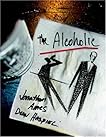 The Alcoholic by Jonathan Ames
Sometimes the graphic novel can boost the story being told, especially when the prose itself feels matter-of-fact. It works for me in this in the same way it worked for me in the outstanding "Fun Home", magnifying the resonance of the story. Ames is brutally honest about where his drinking takes him, and just as honest about his somewhat complicated relationship to doing things about it. And, as with most of his stuff, frank in his dealing with his own complicated sexuality.
 On Beauty by Zadie Smith
My rating: 5 of 5 stars
She's such a wonderful writer. Howard's End is one of my favorite books of all time. I love that she took it as a template, but also made it her own. Her domestic scenes are unequaled, and I loved the last scene so much I actually hugged the book when I was done with it and sat quietly feeling warm and content. TMI, maybe, but it's true.
 Howards End by E.M. Forster
My rating: 5 of 5 stars
I can't even say how many times I've read this book. 7? 8? I even have a special paperback edition that whenever I see I have to buy. It's just about everything all at once. Beautiful balance of character and philosophy. Stellar.
 Fun Home: A Family Tragicomic by Alison Bechdel
My rating: 5 of 5 stars
Brilliant exploration of author's complicated relationship with her father, her own coming out and his sexuality. It was a best book of the year for a reason. The graphics only enrich the story, and since Bechdel herself does the drawing they can't be separated from the prose itself. Excellent example of how graphic novels can succeed as well as conventional ones, especially in something like memoir, that even in prose seems imagistic like memory.
View all my reviews >>
I was looking for this book, Laughing and Dancing Our Way to the Precipice, which seems incredibly fascinating – a woman who by accident not only was witness to the French Revolution but ended up exiled in America during the late 18th century, then returned to France under Napoleon, and then to London, and back to France. The result, it sounds like, was being witness to some of the most important events in European history. Turns out the actual memoir version is only available for something ridiculous like $109.00. I guess you can get the Caroline Moorehead scholarly view of it for $18, which might be nice. I’m always conflicted about whether to read the primary source (which can be either interesting or soporific) or the scholarly guide (which can be good but then you’re dealing with an interpreter. Thoughts?
Anyhow, because of my internet search for this, I came up on this site, www.goodreads.com. It’s an online community of book lover/readers who rate books and talk about them. I’m not really one for joining too many “online communities” because too much information WEARS ME OUT!, but this one seemed like a good idea. And you can do little capsule reviews of things you’ve read or are reading. And then they give you stuff to post on your blog. Hence, the below. So you can have some good reads of your own. Friend me, if you sign up.
A Death in the Family by James AgeeThe "Knoxville Summer 1915" portion in the beginning of the book is one of the most beautiful pieces of prose written, probably because I love the Barber piece so much. I've always meant to read this, so I picked it up.
What's Not to Love?: The Adventures of a Mildly Perverted Young Writer by Jonathan AmesI like Ames. His stories have a "how did I end up here" quality to them I like. He's a somewhat dispassionate observer of his passions, almost 19th century in his voice. I tend to binge on authors, and he's a current subject of gluttony.
The Alcoholic by Jonathan AmesSometimes the graphic novel can boost the story being told, especially when the prose itself feels matter-of-fact. It works for me in this in the same way it worked for me in the outstanding "Fun Home", magnifying the resonance of the story. Ames is brutally honest about where his drinking takes him, and just as honest about his somewhat complicated relationship to doing things about it. And, as with most of his stuff, frank in his dealing with his own complicated sexuality.
On Beauty by Zadie SmithMy rating: 5 of 5 stars
She's such a wonderful writer. Howard's End is one of my favorite books of all time. I love that she took it as a template, but also made it her own. Her domestic scenes are unequaled, and I loved the last scene so much I actually hugged the book when I was done with it and sat quietly feeling warm and content. TMI, maybe, but it's true.
Howards End by E.M. ForsterMy rating: 5 of 5 stars
I can't even say how many times I've read this book. 7? 8? I even have a special paperback edition that whenever I see I have to buy. It's just about everything all at once. Beautiful balance of character and philosophy. Stellar.
Fun Home: A Family Tragicomic by Alison BechdelMy rating: 5 of 5 stars
Brilliant exploration of author's complicated relationship with her father, her own coming out and his sexuality. It was a best book of the year for a reason. The graphics only enrich the story, and since Bechdel herself does the drawing they can't be separated from the prose itself. Excellent example of how graphic novels can succeed as well as conventional ones, especially in something like memoir, that even in prose seems imagistic like memory.
View all my reviews >>
Tuesday, September 01, 2009
Towel Season
This story, Towel Season by Ron Carlson surprised me. I'm not usually one who hears the word "suburbia" and thinks, "I really need to read this story", but thanks to a great reading by James Naughton on Selected Shorts, I had the pleasure. I was blown away.
The story concerns Edison, a math genius, and the neighborhood summer rituals of parties with peers, as well as his relationship with his wife, Leslie. The action of the story is him finding his place in relation to his work and the people around him, and I think as well the nature of work and description of work. I didn't resonate so much with the suburban aspect, but rather in the metaphor he and his wife work out for him to talk to her about his very complex work in theoretical mathematics. Though theoretical mathematics has become the shorthand for genius and unknowable, it didn't feel gimmicky.
In exploring the relationship, Carlson exposes the nature of any creative enterprise--at least for me--the depths one goes to inside it, and the difficulty in relating that to another person. Even more, the relationship between Edison and Leslie is beautifully drawn, touching in a way I didn't expect. The strength of their relation, and what is sustaining to both about it, is the suprise of the story. I loved how deep Edison went in, and how his wife managed to find a way to talk to him about it that was equally imaginative.
Loved it. There's another one by him called "The H Street Sledding Record" that is mentioned by people as one of the favorites ever on the program, so I'll seek that out.
I also love that according to Wikipedia he is a collector of rare and endangered badgers. Ha. And this quote, which is fab: "I did not understand my story; many times you don’t. It’s not your job to understand or evaluate or edit your work when you first emerge from it. Your duty is to be in love with it, and that defies explanation."
And this week, Chekhov and Welty--what a great combo.
The story concerns Edison, a math genius, and the neighborhood summer rituals of parties with peers, as well as his relationship with his wife, Leslie. The action of the story is him finding his place in relation to his work and the people around him, and I think as well the nature of work and description of work. I didn't resonate so much with the suburban aspect, but rather in the metaphor he and his wife work out for him to talk to her about his very complex work in theoretical mathematics. Though theoretical mathematics has become the shorthand for genius and unknowable, it didn't feel gimmicky.
In exploring the relationship, Carlson exposes the nature of any creative enterprise--at least for me--the depths one goes to inside it, and the difficulty in relating that to another person. Even more, the relationship between Edison and Leslie is beautifully drawn, touching in a way I didn't expect. The strength of their relation, and what is sustaining to both about it, is the suprise of the story. I loved how deep Edison went in, and how his wife managed to find a way to talk to him about it that was equally imaginative.
Loved it. There's another one by him called "The H Street Sledding Record" that is mentioned by people as one of the favorites ever on the program, so I'll seek that out.
I also love that according to Wikipedia he is a collector of rare and endangered badgers. Ha. And this quote, which is fab: "I did not understand my story; many times you don’t. It’s not your job to understand or evaluate or edit your work when you first emerge from it. Your duty is to be in love with it, and that defies explanation."
And this week, Chekhov and Welty--what a great combo.
Yoga

I've been doing yoga a lot lately and I'm really loving it. But this photo made me smile. IT's just perfect. And it shows if you need to you can do yoga in a skirt and a babooshka. It's all good.
Subscribe to:
Posts (Atom)