I've been posting some essays over at Medium, so enjoy....
Husband
Jason Segel is my Spirit Animal
Sour Grapes
Hope you like!
Monday, April 10, 2017


Sunday, August 28, 2016
Social Media and its discontents
I was in Lake Tahoe last week for a week. It was gorgeous. I rarely, if ever, have taken a "vacation" in my life - a trip for the express purpose of going somewhere I've never been and relaxing. Relaxing is a task to me. I'm not the best at it. I find when I look for comfort, I seem to only notice what's uncomfortable. It usually has to come upon me unawares.
I did relax, though, which included a little beach time, safe under an umbrella and lots of sunscreen; a Steve Miller band concert (who ever thought that would happen?); a trip to Vikingsholm in Emerald Bay; and a trip to Nevada City to visit a friend and a short hike in the Yuba River.


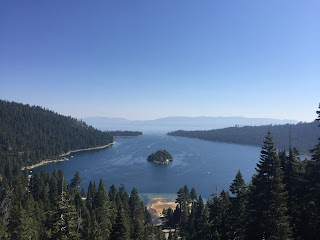
I did relax, though, which included a little beach time, safe under an umbrella and lots of sunscreen; a Steve Miller band concert (who ever thought that would happen?); a trip to Vikingsholm in Emerald Bay; and a trip to Nevada City to visit a friend and a short hike in the Yuba River.


Beautiful, huh? I hiked up stream by myself and waded in water with the fish. Those boulders, by the way, are huge. I spent a lot of my time alone, which was good, but I also noticed this way in which social media has changed the way I experience things. I had a compulsion to document. I took pictures, posted them on Facebook. I instagrammed. Even when I was swatting away bees overlooking Emerald Bay, I took a picture.
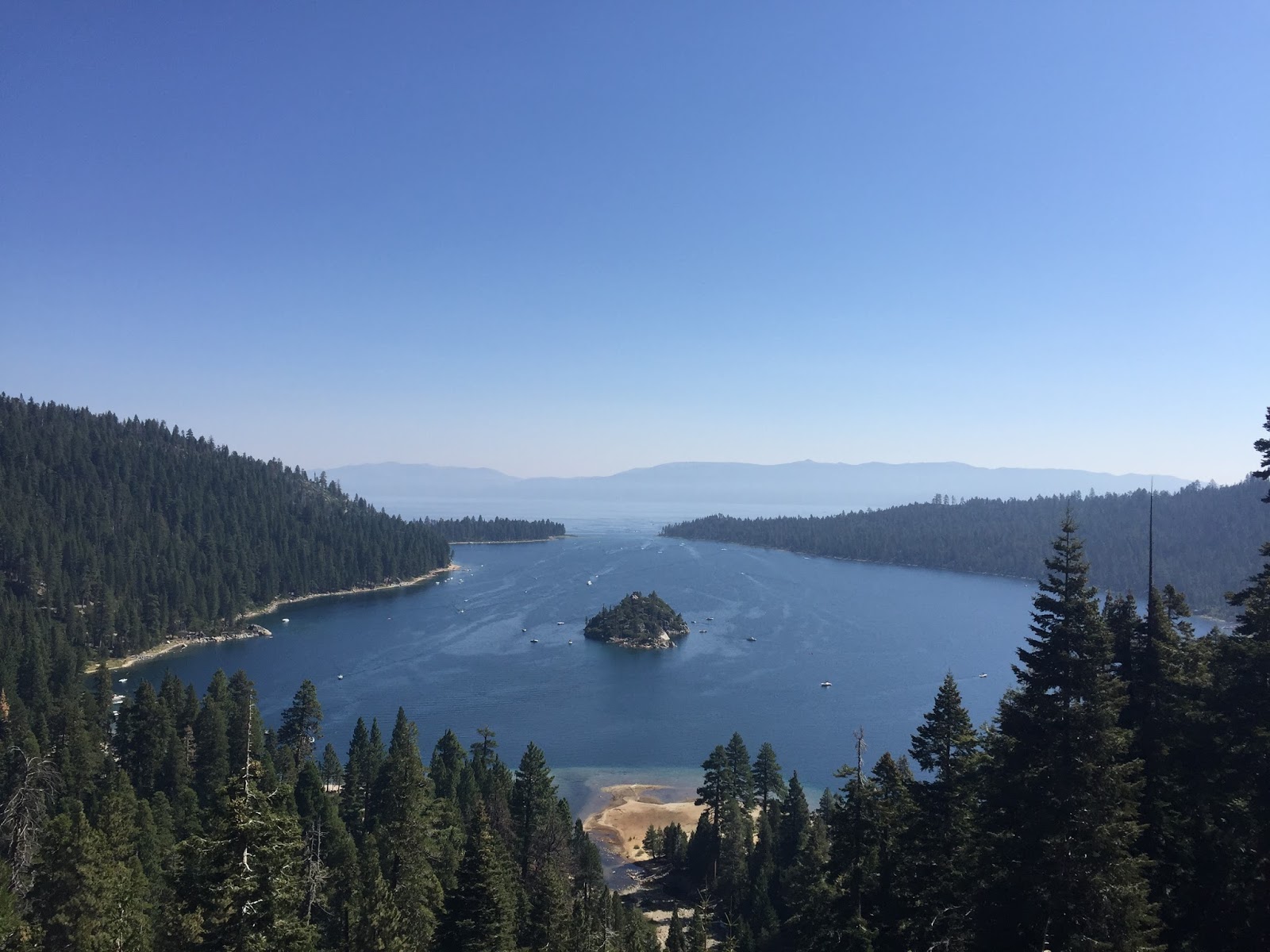
And it is gorgeous, as you can see, so there's nothing wrong with that. But I noticed this odd compulsion to stay constantly connected that somehow stands in the way of something deeper. I had brought with me Zadie Smith's book Changing My Mind, a collection of essays I'd been meaning to read for a while. Like since 2009 when it came out. Better late than never. The essays are wonderful, and a form I really respond to. Her essay on Middlemarch brought tears to my eyes. I even wrote her a fan letter. What I've noticed, though, is that this immediate connection, which also brings immediate emotions - happiness, outrage, anger, adrenaline - somehow stops the thought and more complicated feelings that comes when there is a deeper contemplation. Perhaps even this half-baked blog post is a symptom. I've been aware, though, that when I have an idea or something I want to explore, I'll move over to social media - either to share it before it is something deeper, or to just check something out and the idea melts away. I've noticed that joy comes out of contentment, and that takes time. Sharing is something I love to do, but share connotes a giving and a receiving. Posting makes more sense for what happens on social media, an activity that is much like stapling a notice for a missing animal on a light post.
Don't get me wrong - I enjoy social media, but it does not provide me with a sense of connection in the same way that actual connection does. That's probably why people feel more depressed the more time they spend on it (just Google 'social media and depression). A friend once said social media is like having a conversation at a cocktail party when someone randomly walks by and shouts "I love pickles!" and leaves. More aptly, perhaps, it's a giant room of people screaming their love for particular pickles. The absurdists would have a field day.
I do actually enjoy social media, but like any tool I have to figure out the best way to use it. Sometimes, when it's immediate reaction and response, it impedes a deeper response. I think that bay is instructive. Even looking at it now is calming. Sometimes to get the bigger picture takes a longer hike. I drove 7 1/2 hours to get up there. I hiked down a mile to Vikingsholm, the 38 room mansion built on the shore of the bay in the late twenties, and back up a mile. It was quite a steep walk, with panting dogs and complaining children being encouraged by their parents to keep walking. I was glad I went to see the house. I was sore the next day. Nothing about it was immediate, but I felt glad to have taken the time. There is no substitute for time and experience. I'm encouraging myself to go a little deeper.
Monday, August 22, 2016
Walking
I never know what it means to work on a poem, and usually it's just a jumble of words that come to me, and I feel better when I write them down. I suppose what you do is shave them, but in the meantime, this works as a repository.
Kicked off zig zag something like
that curlicue spiral while everyone walks
straight.
You leave the pattern like on grass.
You can't walk.
Set off in the wrong direction
again
You want to.
The thing is.
Blame.
Not much to do about it now
These are your feet and you walk
the way you walk.
Sideways, half-moon, circles, curled.
Kicked off zig zag something like
that curlicue spiral while everyone walks
straight.
You leave the pattern like on grass.
You can't walk.
Set off in the wrong direction
again
You want to.
The thing is.
Blame.
Not much to do about it now
These are your feet and you walk
the way you walk.
Sideways, half-moon, circles, curled.
Monday, July 25, 2016
Cleaning Up
Another friend died today. He was just past 50, and died after an illness. We weren't super close, but I did stay with him for a week in New York when he was doing a show there a few years ago. He was a light, fun fellow. He brought a lot of joy to people and smiled and laughed a lot. I always loved seeing him and we always gave each other a big hug. The last time he said we should get together for coffee.
For years I kept track of the people I knew who died - friends, colleagues, teachers, relatives. For a time I knew many people under 40 who died in freakish ways, from serial killer to suicide to cancer to meningitis to flesh eating virus. One day you'd get a call that someone had succumbed to a surprise illness and had left behind a partner, a child. Or there was an accident. So many surprising, unexpected ways. Grief is strange, unpredictable, which is all I've learned of it. I wrote a poem about it once -
The loss
Is a ring, an undertone
A tuning fork struck
Again again unexpectedly again
To begin -
The other day some circuitous thoughts led me to Joan Didion. Come to think of it, it's her quote, "a writer is always selling someone out," which is usually how she comes to mind, thinking of some idea and how it might offend someone. Anyhow, I thought of her loss of her husband and child in quick succession, and how insurmountable it must be to bear that loss. Then the thought came to me that there's some virtue in being the one left to turn out the lights. There must be. We'll all go. It's the unavoidable end we push from our minds so we can live our lives. It's probably just as hard to leave the the party when it's going, but there is some comfort to be taken in being the one to stay and clean up, to bear the grief, to continue the memory. That's how I look at it anyway, or have to. Someone came to the party and left. I hope he had a good time, and I'll certainly miss him.
For years I kept track of the people I knew who died - friends, colleagues, teachers, relatives. For a time I knew many people under 40 who died in freakish ways, from serial killer to suicide to cancer to meningitis to flesh eating virus. One day you'd get a call that someone had succumbed to a surprise illness and had left behind a partner, a child. Or there was an accident. So many surprising, unexpected ways. Grief is strange, unpredictable, which is all I've learned of it. I wrote a poem about it once -
The loss
Is a ring, an undertone
A tuning fork struck
Again again unexpectedly again
To begin -
The other day some circuitous thoughts led me to Joan Didion. Come to think of it, it's her quote, "a writer is always selling someone out," which is usually how she comes to mind, thinking of some idea and how it might offend someone. Anyhow, I thought of her loss of her husband and child in quick succession, and how insurmountable it must be to bear that loss. Then the thought came to me that there's some virtue in being the one left to turn out the lights. There must be. We'll all go. It's the unavoidable end we push from our minds so we can live our lives. It's probably just as hard to leave the the party when it's going, but there is some comfort to be taken in being the one to stay and clean up, to bear the grief, to continue the memory. That's how I look at it anyway, or have to. Someone came to the party and left. I hope he had a good time, and I'll certainly miss him.
Wednesday, July 13, 2016
On Surety
I just read Kathryn Schulz' article about Thoreau in the New Yorker, which points out what a difficult, narcissistic, hypocritical misanthrope he was, and how pernicious his ideas actually are, as they're not based in fact or experience, but opinion. It's quite an article, and fascinating to think of what is so interesting to him for the American imagination. One thing he was, though, was sure of himself.
I also recently finished a book by Dan Harris, 10% Happier: How I Tamed the Voice in My Head, Reduced Stress Without Losing My Edge, and Found Self-Help That Actually Works--A True Story It's quite a title.
I'm posting this because it was a draft of a post I started and didn't finish, and now the title is ironic. Sometimes it's worth it for a little laugh.
I also recently finished a book by Dan Harris, 10% Happier: How I Tamed the Voice in My Head, Reduced Stress Without Losing My Edge, and Found Self-Help That Actually Works--A True Story It's quite a title.
I'm posting this because it was a draft of a post I started and didn't finish, and now the title is ironic. Sometimes it's worth it for a little laugh.
How does this all work?
I haven't written on this blog in some time, but inspired as every by Elizabeth Aquino's blog, and how she writes daily, I thought I'd truck on over and put some words down, as my writing has been spotty of late.
Anyhow, when I logged in, I saw that my page, this one here, had 112 views on July 7th. This page normally has about 2 views a day, so I'm wondering what happened that day on the web that made 112 people visit my page. Not like they left comments, or even so much as wiped their feet on the rug, but it would be nice to know. You can't though. I can barely remember July 7th, and it was 6 days ago. How does this all work?
I'm noticing how fast things are moving. Blogging, which once felt like the most immediate form of communication, now feels as antiquated as letter writing. What with Twitter, Snap Chat, and Pokemon Go, we can immediately record and watch ourselves recording. We find ourselves so fascinating. Blogging is basically now journalism. Research? Who cares. I thought today that it's gone from "don't trust everything you read" to "don't trust anything you read." Yet, as you can read here, we have an endless need to write it, and an endless need to consume it. I love the phrase "crowded media landscape," which would imply land or something behind the crowd. At this point, there is the crowd, no sky above, no mountains behind, no sea below. Just crowded media.
So I guess I'm holding up my little virtual sign, too. Anybody else routinely overloaded?
This is becoming surprisingly bitter in a way I didn't expect. That's okay, though, I probably won't remember it tomorrow.
Sunday, November 22, 2015
Spontaneous Sunday Poetry
I listened to a story about a city in Brazil -
water dry in months for destruction of the rainforest.
A butterfly floated past looking for the memory of a field,
A bee hovered at my car window, which will never be a flower.
water dry in months for destruction of the rainforest.
A butterfly floated past looking for the memory of a field,
A bee hovered at my car window, which will never be a flower.
Friday, November 20, 2015
Audience
I have a cold, but just wanted to jot this down before I forget it. It's an old question.
Back in the ye olde times before social media, smartphones, and more than a handful of television stations (aka the 80s), there was a horrible disease that was afflicting many gay men in major metropolitan areas. Journalists at the time would say things like, "It hasn't infected the general population", which was a way to create fear while simultaneously assuaging it, I suppose. Fear of the other. As a young gay man, a high schooler in fact, it didn't occur to me to question who was speaking, only to internalize that I was not being spoken to and was not part of the general population. I don't think I could have articulated it at that moment, but certainly I was taking it in. Someone was being spoken to, and that person was speaking to someone about me, who was not me. I was still a virgin, but I knew. I was not part of the general population.
I was in my car today, and my usual news program featured a story about the college protests currently happening. What struck me was the tone of the news, which I catch now and again, that by its very nature separates reporter, and by extension the listener, from subject. I hear it a lot. It's a bias. I always wonder though, who is the audience? What's being assumed? Who are they talking to? The subject is always separated and analyzed, but the assumption is somehow that the subject is not part of the "general population" in some way. But who is the audience?
Like I said, I have a cold, so not quite clear on an answer as of yet, but I'm interested in the question. Just who are they assuming they are talking to?
Back in the ye olde times before social media, smartphones, and more than a handful of television stations (aka the 80s), there was a horrible disease that was afflicting many gay men in major metropolitan areas. Journalists at the time would say things like, "It hasn't infected the general population", which was a way to create fear while simultaneously assuaging it, I suppose. Fear of the other. As a young gay man, a high schooler in fact, it didn't occur to me to question who was speaking, only to internalize that I was not being spoken to and was not part of the general population. I don't think I could have articulated it at that moment, but certainly I was taking it in. Someone was being spoken to, and that person was speaking to someone about me, who was not me. I was still a virgin, but I knew. I was not part of the general population.
I was in my car today, and my usual news program featured a story about the college protests currently happening. What struck me was the tone of the news, which I catch now and again, that by its very nature separates reporter, and by extension the listener, from subject. I hear it a lot. It's a bias. I always wonder though, who is the audience? What's being assumed? Who are they talking to? The subject is always separated and analyzed, but the assumption is somehow that the subject is not part of the "general population" in some way. But who is the audience?
Like I said, I have a cold, so not quite clear on an answer as of yet, but I'm interested in the question. Just who are they assuming they are talking to?
Sunday, November 15, 2015
Paris
I want to write about the attacks in Paris, but like everyone, I'm not sure how I would start. I don't know if I'm brave enough.
I woke up this morning, and wanted to change my profile picture on Facebook to black, but instead chose a peace sign with the Eiffel Tower in it. As the day wore on, the conversation on social media became about how the reaction to Paris was an over-reaction and racist, as people did not have the same reaction to the deaths of people in countries that were majority other than white. An article started circulating about a shooting of Christians in Kenya as verification as if it happened today, though it happened in April. I changed my profile picture to black.
I feel like there are places we do not expect coordinated terrorist bombings, while it's awful to think there are places in the world we would. Everyone's symbol of love, light, romance and champagne isn't that place. It's closer to home. I'm sure race is a factor, as is economics, as is Western centrism. All these things. And suddenly my reaction to this horrible event felt like it was wrong, that I was doing something wrong by feeling horrible about this particular bombing because it happened in a European nation. I do believe that if coordinated bombings happened in Tokyo, or Mexico City, or Santiago, or Moscow, we would feel the same. Although I don't know. Paris is a place of fantasy. It's also a place this has happened before. An airport bomb in 1984 was the reason I didn't go on a summer study program to France my junior year. A friend of mine did go, and had a wonderful time. The news today included a junior from Cal State Long Beach who was spending her year abroad in Paris, and was killed at a cafe.
I do feel awful about the shootings in Kenya in April. I feel more awful that I don't know that I even saw the news when it happened. Or that these happen at such a rate that it doesn't register more than a "That's horrible." That's even more terrible. So I feel awful and terrible and none of that is doing anything. What's more apparent to me, after the chatter on social media, is that we have an entire region of the world in which we just expect violence. The bombings in Beirut were brought up today, and a friend said, "When I think of Beirut, I think of bombs." That is the most upsetting piece. We do not expect it in Paris, but we expect in Beirut - ironically the city that used to be called the Paris of Middle East. I don't think that we don't feel bad. I'm also not sure what feeling bad does. But for the moment that bland three letter word is about as specific as I can get. I also don't want to feel guilty for feeling bad; that does even less.
Last night I was working for a non-profit that does work in education for at-risk, poor youth. Several of us, in separate conversations, knew there was a need to address the bombings. It was decided that it would be in the invocation, and the woman who spoke beautifully asked us all to hold space, and to have a moment of silence. It was simple, eloquent, and it reminded me that these moments are big for all of us. The silence in a large group was a balm. Social media today was probably not the place. Or who knows - maybe that's the point of it and the perfect place.
When September 11th happened, after walking through the lunar landscape outside the trade center and finally getting on to a train home covered in ash, a young woman started a conversation with me on the train, probably out of proximity and need to speak. She said one of her parents was Palestinian and the other Israeli, and we should have expected something like this sooner. I didn't have a response except to say that might be true and something to talk about, but maybe on the train right after a terrorist attack was not the best place. All of the conversation needs to happen (except for the Right's assertion that people carrying guns would have made a difference - that's actively stupid and insensitive), but perhaps the moment is not at that moment. Perhaps what we could do is hold space. And grieve for the lives, and the complication. Maybe in that pause, we'll find some peace.
Looking at this it sounds like even saying, "let's wait a second" is silencing others. That's not my intent, either. It feels so sticky. It's one part racism, one part cynicism that we have places we expect violence, and one part media coverage. And a large, upsetting conversation that feels insoluble. Even articulating this feels like I will be called out for privilege. I'm self-censoring.
As I was walking to this cafe to just get out of my house, I was at a loss at how to tackle any of this, even to think or write something about it. I passed a homeless man sleeping under a blanket next to a tree shading him and his overturned shopping cart, which became something else to pile on to the misery; another insoluble problem. Just at that moment, a man passed by me with a box from the bakery heading toward the man on the ground and asked, "Hey man, you hungry?" A little space opened. That's what we can do. Ask, offer, act. Witnessing that gave me a little hope. I'll try to do something that would do the same, and hold some space.
I woke up this morning, and wanted to change my profile picture on Facebook to black, but instead chose a peace sign with the Eiffel Tower in it. As the day wore on, the conversation on social media became about how the reaction to Paris was an over-reaction and racist, as people did not have the same reaction to the deaths of people in countries that were majority other than white. An article started circulating about a shooting of Christians in Kenya as verification as if it happened today, though it happened in April. I changed my profile picture to black.
I feel like there are places we do not expect coordinated terrorist bombings, while it's awful to think there are places in the world we would. Everyone's symbol of love, light, romance and champagne isn't that place. It's closer to home. I'm sure race is a factor, as is economics, as is Western centrism. All these things. And suddenly my reaction to this horrible event felt like it was wrong, that I was doing something wrong by feeling horrible about this particular bombing because it happened in a European nation. I do believe that if coordinated bombings happened in Tokyo, or Mexico City, or Santiago, or Moscow, we would feel the same. Although I don't know. Paris is a place of fantasy. It's also a place this has happened before. An airport bomb in 1984 was the reason I didn't go on a summer study program to France my junior year. A friend of mine did go, and had a wonderful time. The news today included a junior from Cal State Long Beach who was spending her year abroad in Paris, and was killed at a cafe.
I do feel awful about the shootings in Kenya in April. I feel more awful that I don't know that I even saw the news when it happened. Or that these happen at such a rate that it doesn't register more than a "That's horrible." That's even more terrible. So I feel awful and terrible and none of that is doing anything. What's more apparent to me, after the chatter on social media, is that we have an entire region of the world in which we just expect violence. The bombings in Beirut were brought up today, and a friend said, "When I think of Beirut, I think of bombs." That is the most upsetting piece. We do not expect it in Paris, but we expect in Beirut - ironically the city that used to be called the Paris of Middle East. I don't think that we don't feel bad. I'm also not sure what feeling bad does. But for the moment that bland three letter word is about as specific as I can get. I also don't want to feel guilty for feeling bad; that does even less.
Last night I was working for a non-profit that does work in education for at-risk, poor youth. Several of us, in separate conversations, knew there was a need to address the bombings. It was decided that it would be in the invocation, and the woman who spoke beautifully asked us all to hold space, and to have a moment of silence. It was simple, eloquent, and it reminded me that these moments are big for all of us. The silence in a large group was a balm. Social media today was probably not the place. Or who knows - maybe that's the point of it and the perfect place.
When September 11th happened, after walking through the lunar landscape outside the trade center and finally getting on to a train home covered in ash, a young woman started a conversation with me on the train, probably out of proximity and need to speak. She said one of her parents was Palestinian and the other Israeli, and we should have expected something like this sooner. I didn't have a response except to say that might be true and something to talk about, but maybe on the train right after a terrorist attack was not the best place. All of the conversation needs to happen (except for the Right's assertion that people carrying guns would have made a difference - that's actively stupid and insensitive), but perhaps the moment is not at that moment. Perhaps what we could do is hold space. And grieve for the lives, and the complication. Maybe in that pause, we'll find some peace.
Looking at this it sounds like even saying, "let's wait a second" is silencing others. That's not my intent, either. It feels so sticky. It's one part racism, one part cynicism that we have places we expect violence, and one part media coverage. And a large, upsetting conversation that feels insoluble. Even articulating this feels like I will be called out for privilege. I'm self-censoring.
As I was walking to this cafe to just get out of my house, I was at a loss at how to tackle any of this, even to think or write something about it. I passed a homeless man sleeping under a blanket next to a tree shading him and his overturned shopping cart, which became something else to pile on to the misery; another insoluble problem. Just at that moment, a man passed by me with a box from the bakery heading toward the man on the ground and asked, "Hey man, you hungry?" A little space opened. That's what we can do. Ask, offer, act. Witnessing that gave me a little hope. I'll try to do something that would do the same, and hold some space.
Sunday, November 01, 2015
Under Construction
My short, Under Construction, is now available to watch online.
I'd embed it, but apparently you can only do that with YouTube videos; I'm sure it's some sort of Google thing.
Anyhow, it's my first film. I hope you enjoy it. I'm reading again tonight, unable to choose a film to watch on Netflix. I have a hard time watching things at home, which is a great irony considering I've been writing scripts for film and television.
Ah, well, mysteries abound. Who am I to question it. Meanwhile, back to my reading, and I hope you enjoy the short if you have a moment to watch.
I'd embed it, but apparently you can only do that with YouTube videos; I'm sure it's some sort of Google thing.
Anyhow, it's my first film. I hope you enjoy it. I'm reading again tonight, unable to choose a film to watch on Netflix. I have a hard time watching things at home, which is a great irony considering I've been writing scripts for film and television.
Ah, well, mysteries abound. Who am I to question it. Meanwhile, back to my reading, and I hope you enjoy the short if you have a moment to watch.
Tuesday, October 13, 2015
Translations

I picked this issue of McSweeney's on sale at Skylight books the other day. It's from 2012. I'm not a huge reader of literary journals. This caught my eye, though, as it's twelve stories in six different translations. The stories are translated from the original language to English, then to another language, then to another, etc. There are three English versions of most of them, and other versions in Arabic, Urdu, French, Spanish, Russian, Japanese, German, Hebrew, etc., from writers from Etgar Karet, Jonathan Lethem, Nathan Englander, Gary Shteyngart, A.S. Byatt, J.M. Coetzee; it's quite a collection. It's also interesting to have writers who you've read in English translate another author from their native language.
The wonderful Kafka "The Creature in our Synagogue" was the story that caught my eye and made me pick it up. It's an odd, disquieting story. It makes me want to read more Kafka. There is also a beautiful fable called "The Fox and Earth God" by Kenji Miyazawa, a delicate, heart-rending tale of jealousy. It's a nifty collection. Pick it up. I think Skylight has a few more, or you can buy it online.
Lists, part...
I'm making a lot of lists.
I've been writing, and not writing. The screenplay I mentioned in my last post (in January? Has it been that long?) was a quarter finalist for a competition. It needs work. So does the pilot I wrote. And that other screenplay I'm working on for a friend. And that short I had an idea for. And that other story.
So, I'm making lists. I'm not sure if this is a good or a bad thing. I make them and do not cross things off. Is making a better list another thing I need to put on my list? It does feel nice to cross things off when I eventually do, but I forget to revisit the list. I've thought about writing more mundane things like grocery and dry cleaning into them, to feel like I've accomplished something. Impossible lists are probably not helping much.
I've several books that are pressuring me to read them, too, as well as a whole lot of television shows. Is it just really too much? How much until you feel full? I've thought about list of those to keep track of what I'm missing - Breaking Bad, Mad Men - maybe I should only watch shows with alliterative titles.
I read that Sherman Alexie doesn't blog because he says it's a waste of time you should be spending writing, instead of writing something about writing, or writing about yourself. I'll put that on my lists of things I'm doing incorrectly.
In the meantime, fingers are moving. I did notice, the other day, when I went to a notebook to write with a pen, which I prefer, I found I was impatient because typing is faster. I have read, though, that it doesn't get as deeply connected to the brain as handwriting. I'll add that to the the list.
I've been writing, and not writing. The screenplay I mentioned in my last post (in January? Has it been that long?) was a quarter finalist for a competition. It needs work. So does the pilot I wrote. And that other screenplay I'm working on for a friend. And that short I had an idea for. And that other story.
So, I'm making lists. I'm not sure if this is a good or a bad thing. I make them and do not cross things off. Is making a better list another thing I need to put on my list? It does feel nice to cross things off when I eventually do, but I forget to revisit the list. I've thought about writing more mundane things like grocery and dry cleaning into them, to feel like I've accomplished something. Impossible lists are probably not helping much.
I've several books that are pressuring me to read them, too, as well as a whole lot of television shows. Is it just really too much? How much until you feel full? I've thought about list of those to keep track of what I'm missing - Breaking Bad, Mad Men - maybe I should only watch shows with alliterative titles.
I read that Sherman Alexie doesn't blog because he says it's a waste of time you should be spending writing, instead of writing something about writing, or writing about yourself. I'll put that on my lists of things I'm doing incorrectly.
In the meantime, fingers are moving. I did notice, the other day, when I went to a notebook to write with a pen, which I prefer, I found I was impatient because typing is faster. I have read, though, that it doesn't get as deeply connected to the brain as handwriting. I'll add that to the the list.
Tuesday, January 06, 2015
Finding a process
I hate writing. I love having written - Dorothy Parker
I'm new to this writing thing, folks. Well, not new. Let's revise that.
I'm new to really sticking to this writing thing and not just vomiting something out every few years when the pressure builds up, folks.
That sounds too complicated.
How about, "Ladies and Gentlemen, thank you for reading this evening. We will be discussing modes of -"
No. I'm new to forming things into coherent pieces. I've only done it a few times. A couple of short plays, a short film, a spec script, a pilot. Doesn't feel like an oeuvre, by any means. Or even a bad habit yet. Or even a style and a voice. I'm barely out of voice preschool.
This evening I'm working on adapting a short story I wrote about ten years ago (has it been that long?) into a screenplay. I always saw it as a film. I kind of see everything as a film. The idea is getting bigger. Anyhow. All of it is very new. It's hard not to be over critical. When I was writing my spec I wrote DON'T EDIT WHILE WRITING across the top of the page as I started writing. Good thing to remember.
Today, as I was brainstorming, which I'm becoming aware is part of the process for me, I suddenly wrote F*** THE RULES, DO WHATEVER YOU WANT. Thank you, inner voice.
The thing about doing this and being self-taught is you read a lot of opinions of how things need to be shaped and formed, what they should look like when they're done. But I'm not there yet. I'm still gathering ingredients, if you will. I haven't even left the grocery store. In one sense of the metaphor, I'm still making a list and haven't even driven to the store yet. It's too early to think about dessert. Actually, that metaphor doesn't make sense, because you really do have an idea when you cook a meal what you need and what it will be. I think this is more driving the cart along the grocery store aisles thinking, "Mmmm. Tacos." Something came up about the relationship in the story, a new place I hadn't discovered, and I felt a pressure in my chest and a well of emotion. I'm hopefully in the right aisle.
Like the post below about good/bad, I think rules are great, necessary to know and have their place. But along the road, when you're making something, the joy is in finding out what it's going to be, to let it become what it is. The best things I loved bent the rules a little. Or that's how I see it; I'm still a novice.
Sunday, January 04, 2015
The Good and Bad
I had an interesting conversation with a woman I know recently. I was talking with her and told her I had downloaded the new Taylor Swift album "1989" last night. I may or may not have been dancing to a few tracks alone in my apartment last night, and with no witnesses that cannot be proven.
The conversation went something like this (discussion of politics and feminism deleted for expediency) :
Her: I don't listen to that kind of music.
Me. Country? This album is pop.
Her: No, I just don't listen to it. I don't like her music, whatever it is.
Me: I think it's fun and I like her and what she has to say. I've realized most of my collection is sad singer/songwriters, and I wanted some happy music.
Her: You don't have to listen to that; there's good happy music.
And scene.
This stuck in my craw, this bad/good dichotomy. Aside from her admission that she doesn't listen to her music, and may, in fact, have never heard it, I was interested in this label of "bad." What's bad music? This particular album was the largest selling of 2014, so people apparently liked it. I don't think music sales are a measurement of good and bad; plenty of great music doesn't sell. In fact, I don't think that's an apt measurement of art at all - good and bad. I can get behind the like/dislike dichotomy, as that's all about personal taste. I personally don't like green pepper, but I don't call it "bad" and shame people for cooking with it; I just don't care for it.
I will go even one step further: I think the good/bad dichotomy is a harmful way to look at art. It's not helpful for a viewer/receiver, as it discounts whatever their personal response may be, and it's not helpful for the artist, as it sets up a judgement of the art before/during/after it's creation. That will, as anyone who has tried to make anything knows, shut down creativity.
A dearest friend gave me Lynda Barry's fantastic latest book Syllabus, subtitled "Notes From An Accidental Professor." The book is notes and exercises from Barry's class about "The Unthinkable Mind" - getting to a place of creation that is beyond thinking that she teaches at University of Wisconsin/Madison. She discusses drawing, and how the inability to render has led most people to think that they are "bad" at drawing, when, she argues, they actually have a style that has yet to form. She encourages coloring - in silence as well as listening to music or lectures. She has great exercises. I've taken her workshop. Her feedback is mostly an emphatic "good! good!" while encouraging no one to discuss their work or anyone else's. In fact, while you're listening to others read you are drawing a spiral and looking at your paper. Her goal is to get out of the thinking mind and in to the place where creation happens. I'm very much over-simplifying, but I thought of it when this friend told me she didn't think Taylor Swift's music wasn't "good."
Tim Burton's movie "Big Eyes" touched on this idea, telling the story of Margaret Keane's Big Eye paintings that were popular in the sixties. Kitsch to many, the painting nevertheless sold millions of copies. They touched a chord, and were painted sincerely. The art world may have called them "bad" art, but they were popular and beloved. Bad? Good? Who knows.
I'm finding the more I create the less I find bad/good a useful dichotomy, either in my own creation or in the assessment of others' work. I can tell you if I'm drawn to it or not. On a critical level, I can hopefully appraise whether it's doing what it wants to do as well as it can, and even better, how to help it get there. But bad and good are beyond me. Even love and hate feel more apt to me. Bad and good, at the end of the day, just aren't very helpful.
I think you get the idea. Now I'm off to color like a ten year old, while maybe listening to something I like. There may be dancing involved. We'll see.
The conversation went something like this (discussion of politics and feminism deleted for expediency) :
Her: I don't listen to that kind of music.
Me. Country? This album is pop.
Her: No, I just don't listen to it. I don't like her music, whatever it is.
Me: I think it's fun and I like her and what she has to say. I've realized most of my collection is sad singer/songwriters, and I wanted some happy music.
Her: You don't have to listen to that; there's good happy music.
And scene.
This stuck in my craw, this bad/good dichotomy. Aside from her admission that she doesn't listen to her music, and may, in fact, have never heard it, I was interested in this label of "bad." What's bad music? This particular album was the largest selling of 2014, so people apparently liked it. I don't think music sales are a measurement of good and bad; plenty of great music doesn't sell. In fact, I don't think that's an apt measurement of art at all - good and bad. I can get behind the like/dislike dichotomy, as that's all about personal taste. I personally don't like green pepper, but I don't call it "bad" and shame people for cooking with it; I just don't care for it.
I will go even one step further: I think the good/bad dichotomy is a harmful way to look at art. It's not helpful for a viewer/receiver, as it discounts whatever their personal response may be, and it's not helpful for the artist, as it sets up a judgement of the art before/during/after it's creation. That will, as anyone who has tried to make anything knows, shut down creativity.
A dearest friend gave me Lynda Barry's fantastic latest book Syllabus, subtitled "Notes From An Accidental Professor." The book is notes and exercises from Barry's class about "The Unthinkable Mind" - getting to a place of creation that is beyond thinking that she teaches at University of Wisconsin/Madison. She discusses drawing, and how the inability to render has led most people to think that they are "bad" at drawing, when, she argues, they actually have a style that has yet to form. She encourages coloring - in silence as well as listening to music or lectures. She has great exercises. I've taken her workshop. Her feedback is mostly an emphatic "good! good!" while encouraging no one to discuss their work or anyone else's. In fact, while you're listening to others read you are drawing a spiral and looking at your paper. Her goal is to get out of the thinking mind and in to the place where creation happens. I'm very much over-simplifying, but I thought of it when this friend told me she didn't think Taylor Swift's music wasn't "good."
Tim Burton's movie "Big Eyes" touched on this idea, telling the story of Margaret Keane's Big Eye paintings that were popular in the sixties. Kitsch to many, the painting nevertheless sold millions of copies. They touched a chord, and were painted sincerely. The art world may have called them "bad" art, but they were popular and beloved. Bad? Good? Who knows.
I'm finding the more I create the less I find bad/good a useful dichotomy, either in my own creation or in the assessment of others' work. I can tell you if I'm drawn to it or not. On a critical level, I can hopefully appraise whether it's doing what it wants to do as well as it can, and even better, how to help it get there. But bad and good are beyond me. Even love and hate feel more apt to me. Bad and good, at the end of the day, just aren't very helpful.
I think you get the idea. Now I'm off to color like a ten year old, while maybe listening to something I like. There may be dancing involved. We'll see.
Wednesday, November 26, 2014
The Theory of Everything
I went to see a matinee of the Theory of Everything (a plus to being laid off is having afternoons free to see an inexpensive matinee. I'm planning on hitting the Sundance cinemas on Tuesday to take advantage of their $5 Tuesdays, too. It's a good movie time).
Anyhow, the movie is a biopic of Stephen Hawking based on a 2007 book by his ex-wife. It's an interesting biopic. As a movie, it's a little diffuse, and there are some plot points that in any other movie would derail the proceedings. It is anchored with strong performances by Eddie Redmayne and Felicity Jones, who manage to keep you entertained and involved enough to not ask some of the more difficult questions that seem to be skirted over. It's worth seeing, but not earth shattering, which is a shame, as his story is.
Hawking was diagnosed with what the film terms "motor neuron disease" and also as ALS. Though Hawking was initially told he had two years to live in 1963, he is still with us, and still writing. It's a triumphant story. The movie deals with the challenge of his care, and the toll it took on his wife and family. It touches on his theory of everything - his search for an elegant mathematical theorem that would explain the universe. Strangely, though, it felt somewhat soft pedaled to me. Perhaps because my father was diagnosed with a neurological disease when I was 5, and died of it when I was 32.
I had a difficult relationship with my father, to say the least. My theory of everything would include anger, resentment, and a lot of rage. It would include violence and the threat of violence. We hear so many stories about people handling their decline with grace. It's important. Those stories are uplifting. This story is uplifting. Perhaps it's the stiff upper lip of it all, but I was wondering if perhaps there was a little more to the story, more frayed edges from a woman who took care of her husband as he diminished physically while also raising their three children. My mother doesn't remember a year of her life. Unlike Hawking and his wife, their divorce was acrimonious and awful, played out on the children as well. It echoes. It becomes less with time, but then something like this movie will bring the sense of that time back.
The movie got the physicality right. Redmayne is transformed - the feet, the curl of the hand; the walking with canes and then the wheelchair and then the motorized wheelchair. My father had heavy wingtips that he would drag along, eventually pulling up to put in the foot rests of his chair once he no longer used the aluminum braces with the gray plastic arm cuffs. My theory of everything would include some point of view of the children, though they seem to have a good relationship with both their parents. I imagine that some people with an illness like this actually grow closer to their families from mutual struggle. That wasn't our story. My theory of everything would include an equation that factors in the possibility of fracture, of loss of purpose rather than drive. And of how to learn that it doesn't need to dictate the future as well.
Hawking moves from a theory that has a need for god and an origin to one that doesn't. His work as explained in the film centers on time and black holes, and how a magnetic pull from this dead star can be so dense that it consumes itself and everything around it. In the denseness, he said, you can measure the radiation from the origin of the universe.
Wednesday, October 29, 2014
Cleese and creativity
I was looking at my notebook today, as I'm feeling a little stuck -
Okay, full disclosure: I picked up a screenplay that I'd started and submitted for a fellowship that I hadn't looked at for a few months. Of course, my first thought was that it was awful, and I was as well by extension. Then I went and got an iced tea.
Back at my desk, I opened a journal thinking I would write a list of all the projects I have ideas for but I haven't started, as list making always calms me a little, though now I realize writing a list of all the things I'm not working on is perhaps counter-intuitive if you are seeking artistic confidence.
Anyhow, I opened to the back and saw this summation of John Cleese's creativity lecture that I had watched a while ago. It was under the single item list "READ FRANKENSTEIN." There are two check marks by that, neither would indicate that I've either purchased or read the book yet. I did, though, see the National Theater version directed by Danny Boyle with Benedict Cumberbatch and Johnny Lee Miller twice, and it was fantastic.
Here are my Cleese notes. I'll save you the block letters as it would look like I'm yelling at you, which is not a great creativity motivator.
- Open mode = curiosity
- Stick with the problem longer
- Tolerate discomfort and anxiety while problem is unsolved
- Don't make a decision just to make you feel better
- Looking at decisiveness as an aim is not helpful
- Give maximum pondering time
- Don't try to get out of creative discomfort just to get out
- Three things you need: Space, Time, Confidence
- Confidence = open to what happens
- You're either free to play or not
- While being creative nothing is wrong
- Don't forget humor
- Keep bringing your mind back to the subject
Good words to remember. I'm going to go stew in some anxiety and unfinished business.
Tuesday, September 02, 2014
Tuesday, August 26, 2014
The Writing Brain
Well, this is a fascinating MRI scanning experiment about writing - the difference in experienced and more novice writers' brains.
21 hours a week? Only 19 hours to go...
In other news, it would be helpful if they discovered what part of the brain is involved in making one sit down and do it, and how to trigger it.
In other other news, I actually have a second draft of a script. No surprise, but I discovered I find it easier to revise and have ideas about other's work than to revise my own. That would be a useful area of the brain to trigger as well, preferably triggered by eating a daily bowl of ice cream.
21 hours a week? Only 19 hours to go...
In other news, it would be helpful if they discovered what part of the brain is involved in making one sit down and do it, and how to trigger it.
In other other news, I actually have a second draft of a script. No surprise, but I discovered I find it easier to revise and have ideas about other's work than to revise my own. That would be a useful area of the brain to trigger as well, preferably triggered by eating a daily bowl of ice cream.
Saturday, August 09, 2014
Tanaquil Leclerc
I just finished watching the documentary "Afternoon of a Faun" about Tanaquil Leclerq from PBS American Masters. Riveting. Tanaquil (Tanny) Leclerq was Balanchine's 4th wife, and a star dancer with the American Ballet theater, when she was stricken with polio in 1956 at the age of 27. There are some incredible dance clips of her dancing with Jacques D'Amboise (a legend in his own right), and clips from ABT in the 50s. She was beautiful, sensuous dancer - intelligent, alluring. The documentary is a fitting tribute, as well as a time capsule for the creation of some of Balanchine's work.
I had no idea of her story. I love documentaries. She lived to almost 80, taught at Dance Theater of Harlem, and lived the rest of her life in a wheelchair once she adjusted to the loss of her legs. It's quite a triumph from a strong, strong person. I am so glad there are photos and film of her dancing. Quite impressive. Ironically, Balanchine cast her in a ballet where she played polio before she contracted it. I won't spoil one of the most heartbreaking moments, but it's incredible how one small decision can effect our entire lives.
Friday, August 01, 2014
Waters of March
This is Waters of March (Aguas de Marco) by Antonio Carlos Jobim sung by the great Elis Regina, who died much too young. Her daughter is the Brazilian singer Maria Rita.
I posted this version, even though it's a little choppy, as it has literal English subtitles. Jobim wrote English lyrics, but these are his original in Portuguese. They're so specific and beautiful. The English lyrics are great, of course, but these are evocative of the end of Summer in Brazil, and much more specific. I think they're much more beautiful. A perfect marriage of word, song, and performer. No wonder some say it's the most beloved Brazilian song of all time.
Subscribe to:
Posts (Atom)